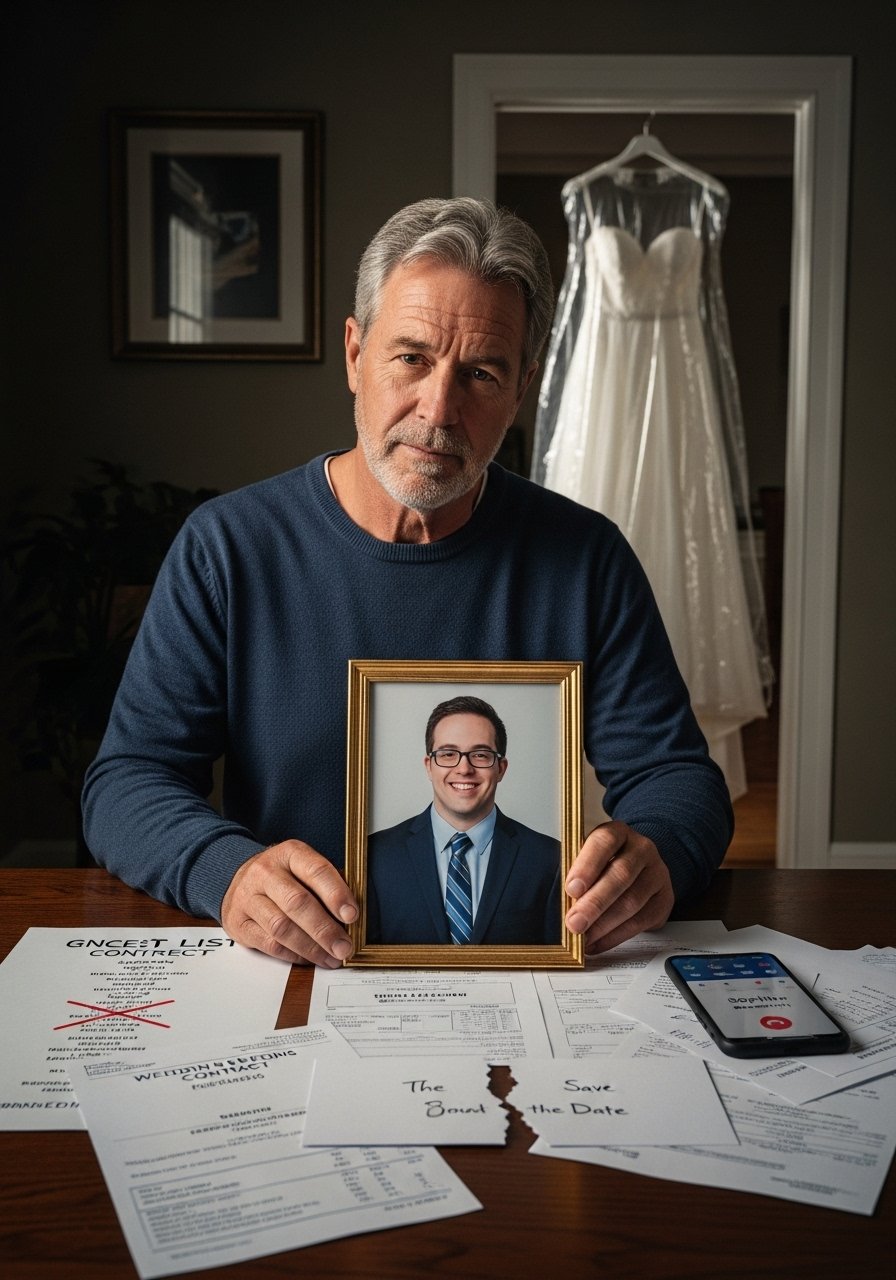
I cancelled my daughter’s $50,000 wedding two weeks before the ceremony. I told every vendor, stopped payment on all deposits I could, and informed every guest that the wedding was off. My daughter is devastated. My wife is furious with me. Half my family says I’m a hero. The other half says I’m a monster who destroyed my daughter’s happiness over a “misunderstanding.”
But it wasn’t a misunderstanding. My daughter uninvited her autistic brother from her wedding because he might “embarrass her” in front of her new in-laws. And when I found out, I decided she didn’t deserve the wedding I was paying for.
Now everyone wants to know: Did I do the right thing? Or did I take it too far?
The Family Dynamic
I’m 58 years old. My wife “Linda” is 56. We have three children:
- “Sophie” (28) – our oldest daughter
- “Marcus” (25) – our son
- “Emma” (22) – our youngest daughter
Marcus is autistic. He was diagnosed at age 4 with what used to be called Asperger’s syndrome, now considered part of the autism spectrum. He’s high-functioning, verbal, incredibly intelligent, and has been the light of our lives.
Is he different? Yes. Does he have quirks? Absolutely. He doesn’t always pick up on social cues. He can be blunt to the point of rudeness without meaning to be. He has special interests he’ll talk about for hours if you let him (currently it’s medieval architecture). He doesn’t like loud noises or crowds. He needs routine and advance warning about changes.
But he’s also kind, funny, loyal, and one of the most genuine people I’ve ever known. He’s my son, and I love him exactly as he is.
Sophie and Marcus have always had a complicated relationship. Growing up, Sophie was embarrassed by Marcus’s differences. She’d get upset when he’d have meltdowns in public. She’d tell us not to bring him to her school events. As a teenager, she rarely brought friends home because she didn’t want to “explain” Marcus.
We tried to help her understand. We put her in therapy. We talked to her about neurodiversity and acceptance. We thought she’d grown out of it as an adult.
We were wrong.
The Engagement
Sophie got engaged ten months ago to “Jason” (30). Jason comes from what Sophie calls an “important family”—his parents are wealthy, socially prominent, very concerned with appearances and status.
From the moment Sophie got engaged, the wedding became her entire personality. She wanted everything perfect. She had a Pinterest board with 2,000 pins. She hired a wedding planner. She had a color scheme that couldn’t deviate by even a shade.
Linda and I agreed to pay for the wedding. We’re comfortable financially—not wealthy like Jason’s family, but we’ve done well. We told Sophie we had a budget of $50,000, which she promptly went over, and we increased it because we wanted her to be happy.
The wedding was planned for June at a beautiful venue two hours away. 200 guests. Sit-down dinner. Open bar. String quartet. The works.
Sophie was stressed but excited. And for months, everything seemed fine.
The First Red Flag
About four months ago, Sophie came over for dinner. It was just her, Linda, and me—Marcus was at his weekly game night with friends, and Emma was away at college.
Sophie brought her seating chart and was obsessing over it.
“I’m putting Aunt Carol at table 12, but she can’t sit near Uncle Ron because of their divorce drama. And Jason’s boss needs to be at a prominent table, but not so close that he feels obligated to give a speech…”
“Where are you putting Marcus?” Linda asked.
Sophie got quiet. “I’m still figuring that out.”
“Well, he should probably be at the family table with Emma and your cousins,” I suggested. “He’s comfortable with them.”
“Actually, Dad, I wanted to talk to you about that.”
Something in her tone made me uneasy.
“Marcus has been invited, right?” Linda asked.
“Of course he’s invited,” Sophie said quickly. “I just… I need to talk to you both about some accommodations.”
“What kind of accommodations?”
“Well, the reception is going to be loud. Music, people talking, clinking glasses. I know Marcus doesn’t do well with that. And there will be a lot of people he doesn’t know. Jason’s family is big, and they’re… a lot. Very social. Very talkative.”
“Marcus can handle it,” I said. “We’ll make sure he has breaks. He can step outside if he needs to.”
“Right, but…” Sophie twisted her napkin. “Jason’s parents are really traditional. They’re very focused on how things look. And I just want to make sure Marcus doesn’t… you know.”
“Doesn’t what?” My voice had an edge.
“Doesn’t have an episode or anything. In front of everyone.”
Linda’s face hardened. “An episode? Sophie, your brother is autistic, not unstable.”
“I know, Mom. I just mean—what if he gets overwhelmed and has a meltdown? What if he starts talking about medieval castles during dinner and won’t stop? What if he doesn’t understand social cues and says something inappropriate?”
“Then we’ll handle it,” I said firmly. “Marcus is your brother. He’s part of this family. He’ll be at your wedding.”
Sophie backed down. “Of course. You’re right. I’m just stressed. Forget I said anything.”
But I didn’t forget. And I started paying closer attention.
The Warning Signs
Over the next few months, Sophie made several comments that bothered me:
- “I told Jason’s family that Marcus is ‘shy’ and might not be very social at the wedding.”
- “I’m seating Marcus in the back, away from Jason’s family, just in case.”
- “Can we make sure Marcus doesn’t give a speech? I love him, but he’s not great at reading the room.”
- “I asked Emma to keep an eye on Marcus during the reception. Make sure he doesn’t wander around talking to random people.”
Each time, Linda or I pushed back. Each time, Sophie claimed she was just being thoughtful and making sure Marcus was comfortable.
But it didn’t feel like consideration. It felt like shame.
The Discovery
Two weeks ago, I had lunch with Emma, who was home from college for the summer. We met at a restaurant near campus.
Emma looked upset. I asked what was wrong.
“It’s about Sophie’s wedding,” she said quietly.
My stomach dropped. “What about it?”
“Dad, I don’t know if I should tell you this. But I can’t… I can’t be part of it if you don’t know.”
“Tell me.”
Emma took a breath. “Sophie uninvited Marcus.”
I stared at her. “What?”
“She sent him an email last week. She said that after ‘careful consideration’ and ‘talking with Jason’s family,’ she’s decided that it would be ‘better for everyone’ if Marcus didn’t come to the wedding. She said the environment would be too overwhelming for him and that he’d be more comfortable staying home.”
I felt like I’d been punched in the gut. “Did Marcus tell you this?”
“No. He told me he understood and didn’t want to cause problems. Dad, he CRIED. He’s been so excited about Sophie’s wedding. He bought a new suit. He’s been practicing social scripts so he wouldn’t say anything weird. And she just… uninvited him.”
My hands were shaking. “Why didn’t he tell me?”
“Because he’s Marcus. He doesn’t want to be a burden. He thinks he’s the problem.”
I paid the check and drove straight to Marcus’s apartment.
The Conversation with Marcus
Marcus lives in a small apartment about fifteen minutes from us. He works part-time at a library and is taking online classes. He’s independent but still needs some support, which we’re happy to provide.
When I got there, he was organizing his bookshelf (one of his calming activities).
“Hey, Dad! I didn’t know you were coming over. Want to see my new book on Norman castles?”
“Marcus, we need to talk about Sophie’s wedding.”
His face fell. He knew what was coming.
“Emma told me,” I said gently. “About the email.”
Marcus’s eyes filled with tears. “I’m sorry, Dad. I didn’t want to tell you because I knew you’d be upset. And it’s fine. Really. Sophie’s right. I probably would be overwhelmed. Weddings are a lot.”
“Marcus, look at me.” I waited until he made eye contact. “Did Sophie actually ask you if you’d be too overwhelmed? Or did she just tell you that you couldn’t come?”
He looked down. “She said it would be better if I stayed home. That Jason’s family is really formal and that I might not… fit in.”
“Did she say that? ‘Fit in’?”
He nodded miserably.
“What else did she say?”
“She said that Jason’s mom has been asking a lot of questions about me. About my autism. And that it might be easier if I just wasn’t there. That way no one would stare or ask questions or… make her explain me.”
I felt rage building in my chest. Not just anger—pure, protective rage.
“She said she loves me,” Marcus continued. “And that this isn’t personal. It’s just about making sure everything goes smoothly.”
“Marcus, you know that’s bullshit, right?”
He looked surprised. I don’t usually curse in front of the kids.
“Sophie is wrong,” I said firmly. “You are not an embarrassment. You are not a problem. You are her brother, and she should be proud to have you at her wedding.”
“But what if I do mess up? What if I say something wrong or get overwhelmed?”
“Then you’ll be human. Just like everyone else at that wedding. And anyone who judges you for that isn’t worth impressing.”
Marcus started crying. Not his overwhelmed crying, but the kind of crying that comes from years of feeling like you’re too much and not enough at the same time.
I hugged him and made him a promise: “I’m going to fix this.”
The Confrontation
I called Sophie immediately. She didn’t answer. I called Linda and told her everything. She was horrified and furious.
We drove to Sophie’s apartment. Jason answered the door.
“Oh, hey! We weren’t expecting—”
“Where’s Sophie?” I asked.
He must have heard something in my voice because he stepped aside immediately.
Sophie came out of the bedroom. “Dad? What’s wrong?”
“Did you uninvite Marcus from your wedding?”
Her face went pale. Then red. Then defensive. “Emma told you.”
“Yes. Emma told me. Because apparently you thought you could just exclude your brother and no one would care.”
“Dad, it’s not like that—”
“Then what is it like? Explain to me how you justified telling your autistic brother he’s not welcome at your wedding.”
Jason stepped forward. “Mr. Thompson, maybe we should all calm down—”
“Stay out of this,” I snapped.
Sophie’s eyes filled with tears. “Dad, you don’t understand. Jason’s family is really important to us. His mom has been asking so many questions about Marcus. About his autism, about how he acts, whether he’ll be ‘appropriate’ at the wedding.”
“And instead of defending your brother, you threw him under the bus.”
“I’m not throwing him under the bus! I’m trying to avoid a situation where Marcus gets overwhelmed and has a meltdown in front of 200 people! Do you know how humiliating that would be?”
“Humiliating for who? For Marcus? Or for you?”
She didn’t answer.
Linda jumped in. “Sophie, Marcus has been practicing for this wedding. He bought a suit. He’s been so excited. And you broke his heart.”
“I didn’t want to hurt him! But I have to think about my marriage, about starting off on the right foot with Jason’s family—”
“If Jason’s family can’t accept Marcus, then they can’t accept this family,” I said. “And if you’re willing to exclude your brother to impress them, then you’re not the person I thought I raised.”
Jason cleared his throat. “Mr. Thompson, I think there’s been a misunderstanding. My parents didn’t demand that Marcus not come. They just expressed some concerns—”
“What concerns? That he’s autistic? That he might not perform the neurotypical social dance perfectly?”
“They’re not used to… people like Marcus.”
“‘People like Marcus,'” I repeated slowly. “You mean autistic people? You mean my son?”
Sophie was crying now. “Dad, please. Try to understand. This is my wedding. The most important day of my life. I just want everything to be perfect. Is that so wrong?”
“Yes,” I said. “It is wrong. Because perfect shouldn’t mean excluding your brother. Perfect should mean having the people you love around you. And if you don’t love Marcus enough to want him there, then you don’t deserve the wedding we’re paying for.”
The room went silent.
“What?” Sophie whispered.
“You heard me. I’m not paying for a wedding that excludes my son. If Marcus isn’t welcome, then there is no wedding.”
The Cancellation
Sophie and Jason spent the next hour trying to convince me I was overreacting. They offered compromises:
- Marcus could come to the ceremony but not the reception
- Marcus could come but sit in the back and leave early
- Marcus could come but Emma would “supervise” him the whole time
I refused all of it.
“Marcus is either a full guest at this wedding, welcomed and celebrated as your brother, or the wedding doesn’t happen,” I said.
“Dad, you can’t do this!” Sophie was hysterical. “The wedding is in two weeks! Everything is planned! We have 200 guests!”
“Then you better decide fast. Is Marcus invited, fully and without conditions?”
Sophie looked at Jason. Jason looked at the floor.
“We need to think about this,” Sophie finally said.
“You have 24 hours,” I said. And I left.
The Next 24 Hours
Sophie didn’t call. Neither did Jason.
Instead, Sophie’s future mother-in-law called me. “Mr. Thompson, I think we need to discuss this situation rationally.”
“There’s nothing to discuss. Either Marcus is welcomed at the wedding or there is no wedding.”
“I understand you’re protective of your son. But you need to understand that a wedding is a significant social event. There are appearances to maintain, family reputations to consider—”
“If your family’s reputation can’t handle an autistic person existing in your presence, then your family’s reputation isn’t worth maintaining.”
“You’re being unreasonable.”
“And you’re being ableist. This conversation is over.”
I called Linda. “I need you to back me up on this.”
There was a long pause. “Sophie is heartbroken. She’s been calling me crying.”
“Linda, she uninvited Marcus. Our son.”
Another pause. “I know. And I’m angry about it too. But canceling the wedding seems extreme. Can’t we find a compromise?”
“The compromise is that Marcus comes to the wedding as a full guest and full family member. That’s it. That’s the compromise.”
“But we’ve spent so much money—”
“I don’t care about the money. I care about our son. Are you with me or not?”
“I…” She sighed. “I’m with you. But Sophie is going to hate us for this.”
“Then she’ll hate us. But at least Marcus will know we have his back.”
The Cancellation Process
When the 24 hours passed with no call from Sophie, I started making calls.
I called the venue and cancelled. They kept half our deposit—$5,000—but refunded the rest.
I called the caterer. Too late for a full refund, but they agreed to return 40%.
I called the photographer, the florist, the DJ, the transportation company. Some gave partial refunds. Some kept everything.
I sent an email to all 200 guests:
“Dear Family and Friends,
We regret to inform you that the wedding of Sophie Thompson and Jason Marshall, scheduled for June 15th, has been cancelled. Due to irreconcilable family differences, we have decided it is best to postpone any celebration until such time as all family members can be included and celebrated. We apologize for any inconvenience.
Best regards, David and Linda Thompson”
I didn’t explain further. Let people ask Sophie if they wanted details.
In total, we lost about $18,000 in non-refundable deposits. I didn’t care.
The Immediate Fallout
Sophie showed up at our house at 7 AM the next morning, screaming.
“You CANCELLED my wedding?! Without even giving me a chance to fix this?!”
“I gave you 24 hours. You didn’t call.”
“Because we were trying to figure out a solution! We were going to invite Marcus!”
“With conditions? With restrictions? Seated in the back like a second-class citizen?”
“No! We were going to include him fully! But you didn’t even give us a chance!”
“Sophie, be honest. Were you really going to welcome Marcus to your wedding? Or were you going to agree to shut me up, and then make him so uncomfortable that he’d leave early anyway?”
She didn’t answer. Because we both knew the truth.
Jason’s parents arrived next. They threatened to sue me for their expenses (they’d paid for the rehearsal dinner and Jason’s tux rental). I told them to go ahead and try.
My phone exploded with messages from relatives:
“How could you do this to Sophie?” “You’ve humiliated her in front of everyone!” “This is about a wedding, not a civil rights movement!” “Marcus wouldn’t have even known the difference!”
That last one especially made me furious.
Sophie’s Campaign
Sophie has spent the last two weeks telling everyone who will listen that I’m a controlling, manipulative father who cancelled her wedding over a “misunderstanding.”
Her version of events:
- She was just trying to make sure Marcus was comfortable
- She never actually uninvited him, just suggested he might be happier not attending
- I overreacted and cancelled everything without discussion
- She’s the victim of her father’s unreasonable demands
- Marcus doesn’t even care and thinks I’m making too big a deal of it
Some people believe her. My sister called me an asshole. Linda’s mother said I took it too far.
But others have been supportive. My brother said, “It’s about time someone stood up to Sophie’s ableist bullshit.” Emma is fully on my side. And several family members have quietly told me they witnessed Sophie’s treatment of Marcus over the years and are glad I finally drew a line.
Marcus’s Response
The hardest part has been Marcus’s reaction.
He feels guilty. He thinks this is all his fault. He keeps apologizing for “causing problems.”
“Marcus, you didn’t cause this,” I’ve told him over and over. “Sophie did. By choosing to exclude you.”
“But now Sophie’s wedding is cancelled because of me. Everyone’s mad. The family is fighting. Maybe I should have just stayed home.”
“No. You should have been invited, welcomed, and celebrated. You deserve that. And Sophie needs to learn that her brother’s dignity is more important than impressing her in-laws.”
I think he’s starting to understand. He’s back in therapy working through it. And he told me last week, “Thank you for standing up for me, Dad. No one’s ever done that before.”
That broke my heart. Because I realized he’s right—over the years, we’ve made excuses for Sophie’s behavior. We’ve asked Marcus to be understanding when she excluded him. We’ve prioritized family peace over Marcus’s feelings.
Not anymore.
Linda’s Struggle
Linda is torn. She agrees that what Sophie did was wrong, but she thinks I went too far.
“You could have given her more time. You could have worked with her to make it right.”
“She had ten months to do the right thing. She had 24 hours to fix it. She chose not to.”
“But cancelling the wedding destroyed her. She’s devastated.”
“And Marcus was devastated when his sister told him he wasn’t good enough to attend her wedding. Where’s your concern for him?”
“I’m concerned for both of them! But Marcus will recover. Sophie’s wedding is gone.”
“She can have another wedding. When she’s ready to include her brother.”
We’ve been to couples therapy twice since this happened. The therapist asked me if I thought the punishment fit the crime.
“This wasn’t punishment,” I said. “This was consequences. Sophie made a choice to exclude her brother. I made a choice not to fund her wedding. Both are valid choices.”
“Even if it damaged your relationship with your daughter?”
“If my relationship with Sophie requires me to accept her treating Marcus like an embarrassment, then maybe that relationship needs to be damaged.”
Extended Family Dynamics
My family is fractured over this. We’re basically split into three camps:
Team David (supporting me):
- My brother
- Emma
- Two of my cousins
- Linda’s brother
- Several family friends
Team Sophie (supporting her):
- My sister
- Linda’s mother
- Jason’s entire family
- About half of our extended family
Team “Both Sides” (Switzerland):
- Most of Linda’s family
- Several cousins
- Friends who don’t want to get involved
The “Both Sides” people keep saying things like:
- “You’re both right and both wrong”
- “This is so sad, you’re both just hurt”
- “Can’t you find a compromise?”
But I’m done compromising on Marcus’s dignity.
What Happens Now
Sophie and Jason are planning a smaller wedding. Jason’s parents are paying for it. It’s scheduled for September—just family and close friends.
Marcus is not invited.
Neither am I.
Sophie sent me an email: “Since you made it clear that you don’t support my marriage, you’re not welcome at my wedding. I hope you’re happy. You chose Marcus over me, and now you’ve lost me.”
I wrote back: “I didn’t choose Marcus over you. I chose to stand up for basic human dignity and family loyalty. When you’re ready to do the same, I’ll be here. I love you. But I will not apologize for protecting your brother.”
She hasn’t responded.
Linda is invited to the wedding. She’s planning to go. I told her I understand, even though it hurts.
Emma is invited but declined. “I’m not going to a wedding that excludes Marcus on principle,” she said. “That’s bullshit, and Sophie needs to know it.”
I’ve never been prouder of Emma.
The Bigger Picture
People keep telling me this isn’t about autism or ableism—it’s just about wedding stress and wanting everything perfect.
But that’s exactly the problem.
When “perfect” means excluding disabled family members, that IS ableism.
When you value the comfort of non-disabled guests over the inclusion of your autistic brother, that IS discrimination.
When you’re more worried about what people think than about your own family’s feelings, that IS a problem.
Sophie had ten months to make different choices. She could have:
- Educated Jason’s family about autism
- Stood up for Marcus when they expressed “concerns”
- Made accommodations to help Marcus be comfortable (quiet room, advance schedule, etc.)
- Talked to Marcus directly about his needs instead of deciding for him
- Included him proudly as her brother
She did none of those things. She chose the easy route: erasure.
And I chose not to fund that choice.
The Question
So here’s what I need to know: Am I the asshole?
People who think I’m wrong say:
- I overreacted to a stressful situation
- I humiliated Sophie publicly
- I destroyed her dream wedding over principle
- I could have handled it privately
- I prioritized one child over another
- The punishment was disproportionate to the offense
- I should have given Sophie more chances to make it right
People who think I’m right say:
- Sophie was being ableist and exclusionary
- Marcus deserved to be defended
- My money, my choice on how to spend it
- Sophie needed to face consequences for her actions
- Standing up for disability rights is always the right choice
- I protected my vulnerable child from discrimination
- Sophie had many chances to do the right thing
I genuinely don’t know anymore. I’m heartbroken that Sophie and I aren’t speaking. I’m devastated that I’ll miss her wedding. I’m worried I’ve damaged our relationship permanently.
But when I look at Marcus—when I see him standing a little taller because someone finally chose him, defended him, prioritized his dignity—I can’t regret what I did.
Maybe that makes me a bad father to Sophie. But it makes me the father Marcus needed.
What would you have done?
UPDATE (One month later):
Sophie got married last weekend. I wasn’t there. Linda went. Emma didn’t.
Apparently Jason’s parents gave a speech about how “family comes first” and how “lucky” they are to have such “wonderful children.”
The irony was lost on no one.
Marcus and I spent the day together. We went to a medieval history museum (his choice) and then got dinner. He told me, “I’m sad about Sophie. But I’m glad you’re my dad.”
I cried in the museum bathroom.
I still don’t know if I did the right thing. But I know I’d do it again.