The Letter That Shattered Everything
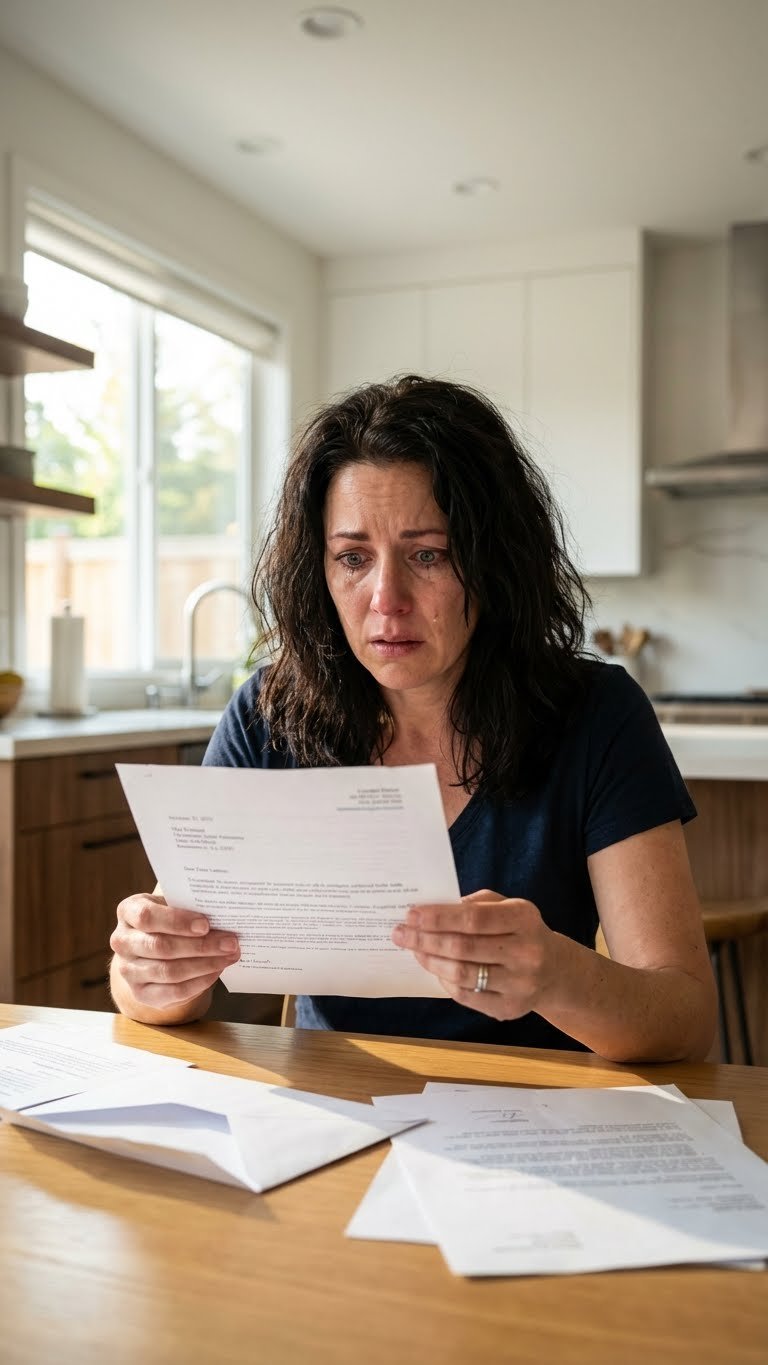
I opened the lawyer’s letter three days after my mother’s funeral, expecting a standard inheritance notice about the house, maybe some savings bonds, her jewelry collection.
Instead, I found out I had a sister.
Not a half-sister from some secret affair. Not a step-sister from a previous marriage. A full biological sister. Same parents. Born eighteen months before me. A sister who’d been alive my entire forty-one years, living just two hours away in Portland, Oregon.
A sister whose existence had been hidden from me with such thorough precision that not one single person in my entire extended family had ever slipped up and mentioned her name.
The letter was formal, almost cruelly clinical in its delivery: “Regarding the estate of Margaret Helen Foster and the matter of her daughters, Katherine Marie Foster and Rebecca Jane Foster, please contact this office to arrange distribution of assets and coordinate family notifications…”
Rebecca. My sister’s name was Rebecca.
My name is Katherine—Katie to everyone who knows me. I’m forty-one years old, married to a wonderful man named David, mother to two teenage boys. Until three days ago, I thought I knew my life story. I thought I understood my family. I thought the sadness in my mother’s eyes was just her personality, her way of moving through the world.
I was wrong about everything.
The Perfect Only Child
I grew up in Seattle in a beautiful house on Queen Anne Hill. My childhood looked perfect from the outside. My father was a successful architect. My mother was a talented pianist who gave private lessons from our home. We had money, culture, education, opportunity.
But there was always something off. Something I couldn’t quite name.
My mother was loving but distant. Present but somehow absent. She’d hug me, but it felt like she was hugging someone else. She’d attend my school plays and piano recitals, but her mind seemed somewhere else. Sometimes I’d catch her staring at me with the saddest expression, and when I asked what was wrong, she’d smile and say, “Nothing, sweetheart. I just love you so much.”
I was desperate for a sibling. I begged my parents constantly. At dinner, I’d ask, “When are you having another baby?” On Christmas mornings, I’d tell Santa all I wanted was a little sister or brother. At family gatherings, I’d watch my cousins play together and feel achingly alone.
My mother would get this look—like I’d physically hurt her—and leave the room. My father would make excuses. “Your mother had complications with your birth. Another pregnancy isn’t possible.” Or, “You’re enough for us, Katie. You’re more than enough.”
But I never felt like enough. I felt like a consolation prize.
The Cancer and The Silence
Mom was diagnosed with pancreatic cancer fourteen months ago. Stage four. Inoperable. The doctors gave her six months. She made it to eleven.
Those final months, I was with her constantly. I took family leave from my job as a high school counselor. I sat beside her hospital bed for hours, holding her hand, reading to her, playing recordings of her favorite piano pieces. We talked about everything—my childhood, her childhood, my father’s death five years earlier, my boys, her students, music, life, regrets.
She told me she was sorry she wasn’t warmer when I was young. She said she’d struggled with depression her whole adult life. She said she wished she’d been a better mother.
I told her she was a wonderful mother. That I loved her. That I understood.
She cried and said, “You don’t understand, Katie. You can’t.”
I thought she meant the depression. I thought she was talking about mental illness, about the invisible weight she carried.
Three days before she died, she was heavily sedated, barely conscious. I was alone with her. She grabbed my hand with surprising strength and said, “Rebecca.”
“What, Mom?”
“Tell Rebecca… tell her I’m sorry… tell her I never stopped…”
Then she fell asleep. Or unconscious. I wasn’t sure.
I asked the nurses if the medication could cause hallucinations. They said yes, sometimes. I figured Rebecca was an old friend, maybe someone from her childhood I’d never heard of.
I never imagined she was talking about my sister.
The Drive to Portland
After reading that letter five times and sobbing on my kitchen floor, I did something impulsive and possibly insane.
I got in my car and drove to the address listed in the legal documents.
David tried to stop me. “Katie, you need to think about this. Call the lawyer. Get more information. You can’t just show up at this woman’s door—”
“She’s my sister.”
“You don’t know that. You don’t know anything yet. This could be a mistake, a clerical error—”
“She’s my sister, David. I have a sister, and everyone knew except me. Everyone. My mother died without telling me. My father died without telling me. Do you understand how insane that is?”
He looked at me with such sadness. “I know. I just don’t want you to get hurt more than you already are.”
But I was already hurt. I was demolished. And I needed to understand why.
The drive to Portland took two and a half hours. I barely remember it. My mind was spinning with questions. Why? How? When did they give her up? Did she know about me? Did she hate me? Did she grow up thinking our parents abandoned her while keeping me?
The address led me to a modest neighborhood in Northeast Portland. Craftsman houses with front porches, old trees lining the streets, bicycles in yards. Normal. Suburban. Completely ordinary.
I sat in my car across the street from Rebecca’s house for twenty minutes, trying to breathe, trying to think of what to say.
Finally, I walked up to the door and knocked.
Meeting Rebecca
The woman who answered was me.
Not exactly me—but the resemblance was shocking. Same dark hair, same green eyes, same small frame. She was older by eighteen months, but we could have been twins. She wore jeans and an oversized sweater, no makeup, hair pulled back.
She looked at me for a long moment. Then she said, “You must be Katie.”
“You know about me?”
“I’ve always known about you. Come in.”
Her house was warm, cluttered in a comfortable way. Books everywhere. Plants in the windows. Photos on the walls—and I recognized faces in some of them. Our mother. Younger. Smiling. Holding a baby I now realized was Rebecca.
We sat in her living room. She made tea. Neither of us knew how to start.
Finally, she said, “I’m sorry about Mom. I wanted to go to the funeral, but I thought… I didn’t think I should.”
“Why not? She was your mother too.”
“It’s complicated.”
“Then uncomplicate it. Please. Because I just found out you exist three hours ago, and I’m losing my mind.”
Rebecca took a long breath. Then she started talking.
The Truth About Rebecca
“I have Down syndrome,” she said simply. “Did you notice?”
I had. Her features were slightly different, her speech pattern a bit slower. But honestly, I’d been so shocked by the resemblance that I hadn’t processed it.
“When I was born in 1982, it was different than it is now. Doctors told parents that children like me should be institutionalized. That we’d never learn, never develop, never have real lives. They said keeping me would destroy the family. They recommended putting me in a home and ‘starting fresh.'”
My stomach dropped. “But they didn’t—”
“No. Mom and Dad kept me for the first six months. Mom especially. She refused to listen to the doctors. She said I was her baby, and she loved me, and she wasn’t giving me up.”
“Then what happened?”
“Dad wore her down. He came from old Seattle money—you know that. His family had expectations. A disabled child was… embarrassing. Shameful. Bad for his career. His mother—your grandmother—told Mom that raising me would be ‘cruel to everyone involved.’ That it wasn’t fair to me to struggle through life. That it wasn’t fair to any future children to have a disabled sibling.”
I felt sick. My grandmother, who’d died when I was twelve, who’d seemed so proper and kind—she’d convinced my mother to give away her baby?
“They didn’t institutionalize me, though. Dad found a compromise. His sister—Aunt Linda—couldn’t have children. She and Uncle Robert lived in Portland. They agreed to raise me. Secretly. The family story was that I was their late-in-life surprise. No one outside the immediate family knew the truth.”
“Aunt Linda,” I whispered. “Aunt Linda is your…”
“Adoptive mother. Yes. She raised me. She was good to me, Katie. She loved me. But she wasn’t Mom. And Mom… Mom visited. Not often. But she came. She was the ‘family friend who played piano.’ She’d come a few times a year, and we’d spend the day together. She taught me to play piano. Not well—my fingers don’t work quite right—but enough. Music was our thing.”
Tears were streaming down my face. “Did she… did she love you?”
“Yes.” Rebecca’s eyes filled too. “That’s what made it so hard. She loved me desperately. You could see it. She’d hold me and cry. When I was little, I didn’t understand. When I got older and figured out the truth—I was about sixteen—I was so angry. But Linda explained it. Said Mom wanted to keep me, but Dad and his family wouldn’t allow it. Said Mom chose to have you because she couldn’t live without any children at all, but the guilt of keeping you while giving me away destroyed her.”
The Two Daughters
“You were born eighteen months after I was placed with Linda and Robert. Mom was pregnant with you the last time she saw me as a baby. I think… I think she needed to believe she could be a good mother. That maybe she’d made the wrong choice with me, but she could do it right with you.”
“But it wasn’t right,” I said. “It was a lie. Our whole life was a lie.”
“I know. But Katie, you have to understand—it was 1984. Disability rights weren’t what they are now. People like me were hidden away. Families were ashamed. What Mom and Dad did was awful, but it was also normal for that time.”
“That doesn’t make it okay.”
“No. It doesn’t. But maybe it makes it understandable.”
We sat in silence for a moment. Then I asked the question that had been burning in my mind since I read that letter.
“Why didn’t anyone tell me? Dad died five years ago. He could have told me then. Mom had months to tell me before she died. Why keep the secret?”
Rebecca’s expression was sad, knowing. “Because telling you meant admitting what they’d done. Admitting they gave away their disabled daughter but kept their ‘normal’ one. How do you confess that to the child you kept? How do you say, ‘We had another daughter, but she wasn’t perfect enough, so we gave her away, but you were, so we kept you’?”
“That’s not what you are. You’re not—”
“I know what I am, Katie. I’m forty-three years old. I have Down syndrome. I work part-time at a bookstore. I live independently, which is something most people wouldn’t have predicted in 1982. I have friends. I date sometimes. I have a good life. But I’m not what they wanted. I wasn’t the right kind of daughter for their family image.”
The bitterness in her voice broke my heart.
The Will and The Inheritance
“The lawyer’s letter mentioned an inheritance,” I said. “What did Mom leave us?”
Rebecca smiled sadly. “That’s the other thing. Mom left everything to be split equally between us. The house, her savings, her investments. Everything fifty-fifty.”
“Everything?”
“She put it in her will twenty years ago, right after Dad’s mother died. I think once Grandmother was gone, Mom felt like she could finally acknowledge me, at least legally. She couldn’t do it publicly—she was too ashamed, or too scared, or too something—but she could do it in death.”
“How much?”
“About two million dollars. So a million each.”
I stared at her. “And you never told me? You knew about this will, knew I’d find out eventually, and you just… waited?”
“What was I supposed to do? Call you up out of nowhere? ‘Hi, I’m your secret sister, and by the way, our mom’s dead, so we’re inheriting money together’? How would that have gone?”
She had a point.
“Did the extended family know? Aunt Carol, Uncle James, all the cousins?”
“No. Just Linda, Robert, our parents, and Grandmother. Everyone else believed I was Linda’s biological daughter. At family gatherings—the few times I came—I was introduced as your cousin Rebecca.”
“Oh my God. You were at family gatherings? I met you?”
“Twice. Once when you were about seven and I was nine. Once when you were twelve and I was fourteen. You barely noticed me. I was just the quiet older cousin who didn’t talk much.”
I tried to remember. Vague memories surfaced—a girl who sat in the corner at Thanksgiving, reading. Someone Aunt Linda kept close. Someone my grandmother barely acknowledged.
“Did you hate me?” I asked quietly.
“Sometimes,” Rebecca admitted. “When I was younger. I’d see pictures of you—Mom carried photos in her wallet, which Linda showed me—and you looked so happy, so confident. You had the life I should have had. The parents I should have had. So yes, sometimes I hated you. But it wasn’t your fault. You didn’t know. You were just a kid who loved her parents.”
The Hidden Photos
“Can I show you something?” Rebecca stood and left the room. She returned with a shoebox.
Inside were photos. Dozens of them. My mother holding baby Rebecca. My mother and toddler Rebecca at a park. My mother teaching young Rebecca piano. Years of stolen moments, documented and hidden.
“She gave these to Linda,” Rebecca said. “When Mom died, Linda gave them to me. Said I should have them. Said Mom loved me every day of her life but didn’t know how to fix what she’d done.”
I picked up a photo of my mother—maybe thirty years old—holding five-year-old Rebecca on her lap at a piano. The look on my mother’s face was pure love. Pure agony. A woman torn completely in half.
“Did Dad ever visit you?”
“Twice. Once when I was ten. Once when I was twenty-five, right before he got sick. Both times he cried. Said he was sorry. Said he’d made the wrong choice but didn’t know how to fix it. The second time, he told me I’d turned out beautifully, and he was proud of me. Then he left, and I never saw him again.”
I couldn’t breathe. My father—my proper, controlled, successful father—had cried and apologized to his secret daughter while maintaining the lie to me.
The Confrontation I Couldn’t Have
“I needed to hear this from her,” I said. “I needed Mom to explain this to me herself. To tell me why. To apologize.”
“She couldn’t. She was too broken by what she’d done. That’s what Linda says. That the guilt destroyed her. That she became depressed after you were born because she loved us both but could only keep one of us. She tried to be a good mother to you, but she was haunted by me.”
“That’s why she was so distant. I always felt like she was looking past me at someone else.”
“She was looking at me. I’m sorry, Katie. I know that hurts.”
It did hurt. It hurt to know my mother spent my entire childhood grieving a daughter she’d given away. That every time she looked at me, she saw Rebecca’s absence. That I was never enough because I was only half of what she’d lost.
But it also explained everything. The sadness. The distance. The way she’d leave the room when I begged for a sibling. She already had another child. She’d just chosen not to keep her.
What Happened Next
I stayed in Portland for three days. Rebecca and I talked for hours. We looked at photos. She showed me her life—her job at Powell’s Books, her apartment, her routines. She introduced me to her friends, who all knew she was adopted but didn’t know the whole truth.
We were so similar. Same sense of humor. Same gestures. Same way of tilting our heads when we thought. Same love of music. We were sisters in every way that mattered.
On the third day, I asked her the question I’d been afraid to voice.
“Can we try? To be sisters? Actually sisters? Not just legal co-inheritors or distant relatives, but real sisters?”
Rebecca looked at me with those familiar green eyes—our mother’s eyes. “I’ve wanted a sister my whole life, Katie. I’ve wanted you my whole life. I just didn’t think I was allowed to have you.”
“You’re allowed. Please. I don’t want to lose forty-one years with you.”
She hugged me then. A real hug. And it felt like something broken inside me started to heal.
The Reckoning
We sold our mother’s house together. The process forced us to go through her belongings. In her closet, hidden in a hatbox, we found letters. Years of letters written to Rebecca but never sent.
Letters apologizing. Letters explaining. Letters begging for forgiveness. Letters saying “I love you” over and over. Letters describing every achievement I’d had—graduations, my wedding, my children’s births—and how much she wished Rebecca could have been there.
She’d documented both our lives. Both her daughters. But she’d only claimed one publicly.
We burned the letters in Rebecca’s backyard. She said it felt right—letting go of Mom’s guilt, letting her rest.
My extended family found out the truth when the estate was settled. Aunt Carol called me, hysterical. “How could you not tell us? How could Margaret and Richard hide this from everyone?”
“You knew Aunt Linda’s daughter. You met her at holidays. You just didn’t know she was your niece instead of your niece-once-removed.”
“But… Down syndrome? They gave her away because of Down syndrome?”
“It was 1982. Apparently that’s what people did.”
“That’s monstrous.”
“Yes. It was.”
Some family members apologized. Some got angry—at my parents, at the situation, at the world. Some struggled to adjust. My cousin Jennifer said she’d always thought there was something weird about how Grandmother treated Rebecca coldly at family gatherings.
Aunt Linda—Rebecca’s adoptive mother and our biological aunt—was the hardest conversation. She was seventy-three, still sharp, still defensive of her sister and brother-in-law.
“They did what they thought was best,” she insisted. “The doctors said—”
“The doctors were wrong,” I interrupted. “Look at Rebecca. She has a full, beautiful life. She didn’t need to be hidden away. She needed her parents.”
“You don’t understand how it was—”
“No, Aunt Linda. You don’t understand how it is. You don’t understand what it’s like to find out at forty-one that your entire childhood was built on a lie. That your mother’s sadness wasn’t just depression—it was grief for a child she’d given away. That every time you asked for a sibling, you were literally asking for the sister you already had.”
She cried. Said she’d tried to give Rebecca a good life. Said she’d loved her like her own daughter.
“I know you did,” I said, softer. “And I’m grateful. But she should have had all of us. She should have had Mom and Dad and me and you. Instead, she got half a family and a lifetime of secrets.”
Today
It’s been two years since I got that letter. Two years since my world turned upside down.
Rebecca and I talk every week. We visit once a month, alternating between Portland and Seattle. She came to Thanksgiving last year and met David and my boys officially—as their aunt, not their distant cousin-whatever. My son Jack asked why we didn’t grow up together, and I told him the truth: “Because your grandparents made a terrible mistake, and we’re all still learning from it.”
We used our inheritance to set up a foundation. The Foster Sisters Foundation supports families raising children with disabilities. We fund therapy, education, advocacy—everything our mother should have had access to in 1982. Everything that might have helped her keep Rebecca.
It doesn’t fix what happened. Nothing can. But it means something good came from something broken.
Sometimes I still get angry. Angry at my parents for their cowardice. Angry at my grandmother for her cruelty disguised as practicality. Angry at a world that told my mother her daughter wasn’t worth keeping.
But mostly I’m grateful. Grateful that I found out before it was too late to build a relationship with Rebecca. Grateful that she’s kind and forgiving and willing to have me in her life after everything our parents did.
Grateful that my mother, in her guilt and her grief, at least made sure we’d inherit equally. That in death, she finally treated us as what we’d always been: her two daughters.
What I’d Tell Others
If there’s a lesson here, it’s this: secrets don’t protect people. They poison them.
My parents kept their secret to protect themselves from shame, to protect me from difficult truths, to protect the family image. Instead, they poisoned my mother’s entire life with guilt. They robbed Rebecca of her biological family. They robbed me of my sister for four decades.
If you’re hiding something big from someone you love, tell them. Yes, it will be hard. Yes, they might be angry. But the truth, no matter how painful, is always better than a lifetime of lies.
And if you’re someone who just discovered a family secret—I’m sorry. I know how much it hurts. I know how it feels to question everything you thought you knew about the people who raised you.
But you survived their lies. You can survive their truth. And what you build from the pieces—that’s yours. That’s real. That’s something no one can take away.
The Sister I Never Knew I Needed
Rebecca called me last week, excited. She’d been asked to give a talk at a local disability rights organization about growing up in the 1980s as a person with Down syndrome who was “hidden” by her family.
“I want to tell the story,” she said. “Our story. Is that okay?”
“It’s your story too,” I told her. “You get to tell it however you want.”
“Come with me?” she asked. “I think it would mean more if we both told it. If people could see us together. Sisters.”
“Yeah,” I said, my throat tight. “I’ll be there.”
Because that’s what sisters do. Even when they lost forty-one years. Even when the road to finding each other was paved with lies and grief and impossible choices.
We’re sisters. Finally. Truly.
And our mother’s greatest gift wasn’t the inheritance she left us. It was the sister she couldn’t tell me about but made sure I’d find.