For twenty-five years, I told everyone my mother was a saint. She was the woman who “sacrificed everything” for her three children. After my dad left when I was six, she worked three jobs, wore the same tattered coat for a decade, and constantly reminded us that her only goal in life was our happiness. We grew up in a household of “us against the world,” fueled by her stories of how every relative and friend had eventually abandoned or betrayed her.
As her oldest daughter, I made it my mission to repay her. I spent my 20s sending half my paycheck home. I canceled vacations to sit with her when she felt “lonely.” I defended her against my siblings when they started pulling away. I viewed her as a martyr—a fragile, selfless woman broken by a cruel world.
Everything changed last Tuesday when I found the blue folder.
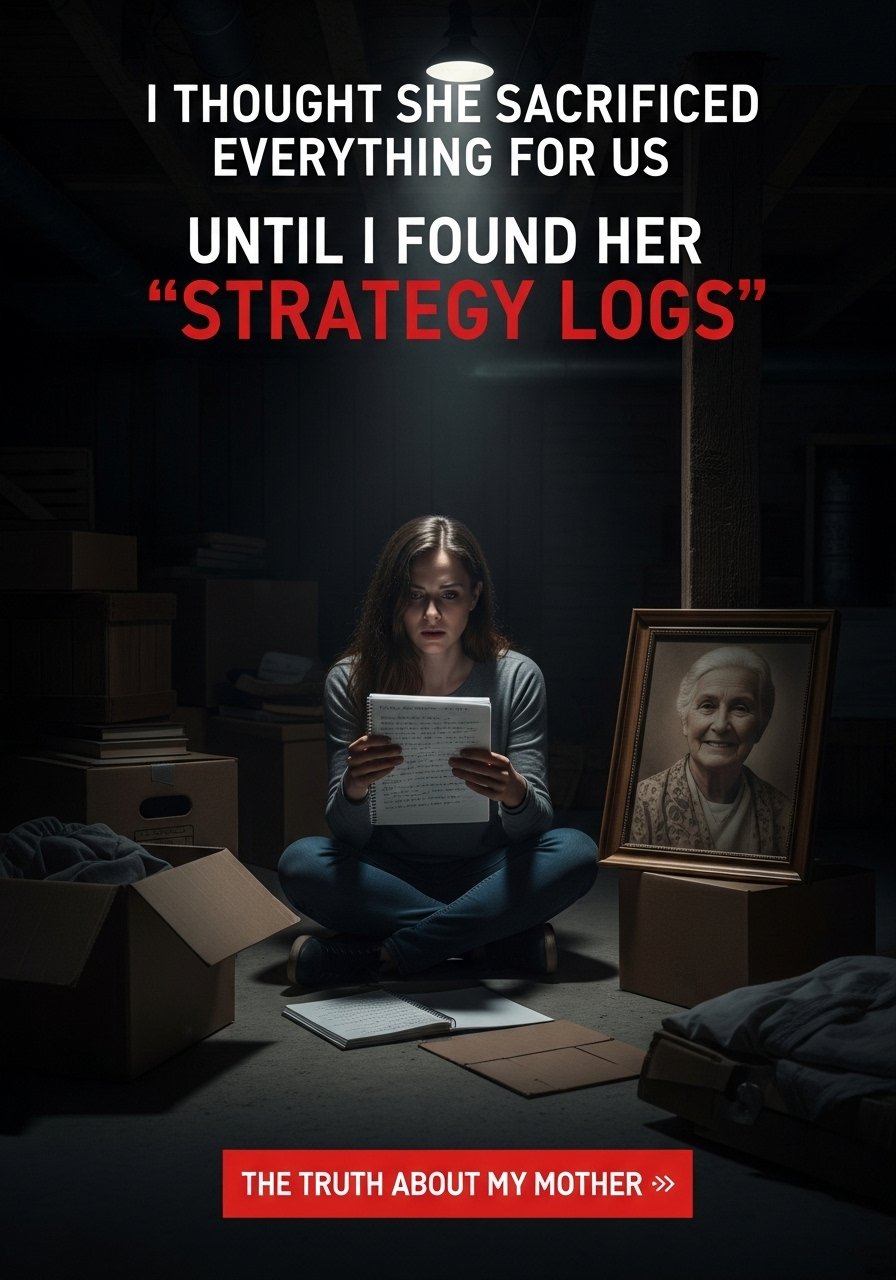
My mother was hospitalized for a minor procedure, and I went to her house to find her insurance papers. Hidden in a locked filing cabinet—inside a folder labeled “Tax Receipts 2004″—was a meticulous record of the last two decades.
It wasn’t just receipts. It was a diary of manipulation.
I found bank statements showing she had been receiving massive monthly alimony and child support payments from my father for ten years longer than she told us. She had claimed he “disappeared and left us with nothing.” In reality, he had been paying for our lives, but she had blocked his number on our phones and returned his letters unopened, telling us he never wrote.
Worse were the “strategy notes.” She had written out bullet points on how to keep my siblings and me “loyal.” One note read: “Tell Sarah the car broke down so she can’t go to the graduation party. Keep her close this weekend. She’s getting too independent.” Another entry detailed how she intentionally sabotaged my brother’s college application to a school out of state so he would stay local.
She wasn’t a martyr. She was a master puppeteer who had systematically isolated us from our father, our extended family, and our own futures just so she would never have to be alone. She wore that tattered coat not because she was poor, but because it was a prop. It was the uniform of her victimhood.
When I confronted her in the hospital, she didn’t cry. She didn’t apologize. She simply looked at me with a coldness I’d never seen and said, “After everything I gave you, this is how you repay me? By snooping?”
I walked out. I haven’t answered her calls since. My siblings are in shock, and for the first time in 20 years, I’ve reached out to my father. I’m mourning a woman who never actually existed.