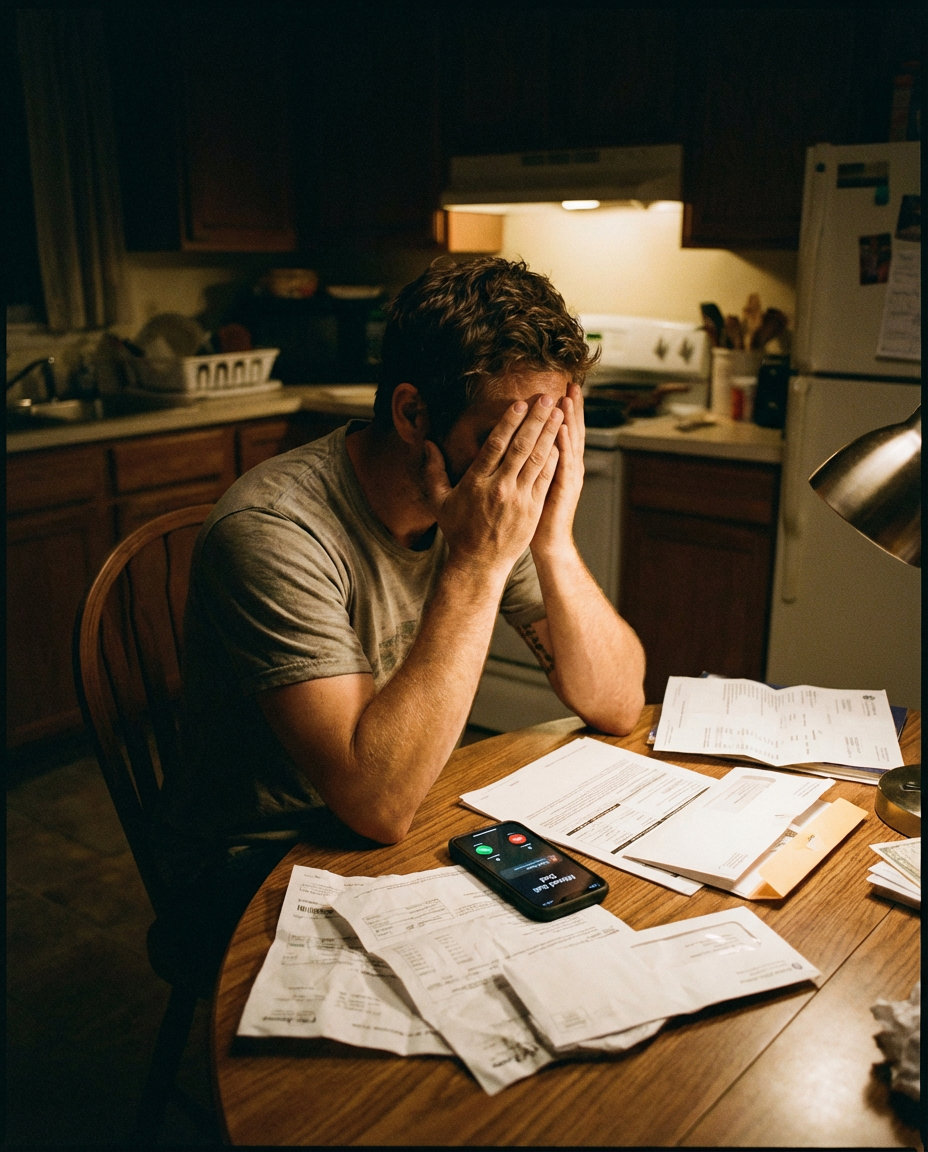
I’m writing this at 3:00 AM because sleep has become a stranger to me over the last month. I feel like I’m vibrating with a toxic cocktail of rage, guilt, exhaustion, and disbelief. I need to get this out of my head before I actually explode.
This isn’t a simple story about family drama. This is about the absolute boundaries of duty, the scars of emotional neglect, and the staggering audacity of parents who burned a bridge and now expect me to rebuild it while they are standing on the other side, demanding I carry them across.
If you’re reading this, maybe you’ve been the family scapegoat too. Maybe you’re the “responsible one” who everyone dumps on. Or maybe you just need to tell me if I’m losing my mind.
Here is the whole messy story.
The Background: The Golden Boy and The Spare
To understand why I’m so furious right now, you have to understand the dynamic I grew up in. My parents are boomer-era folks who subscribed heavily to the idea of having a “Golden Child.”
That wasn’t me.
That was my younger brother, “Dave.” Dave was charismatic, charming, and fundamentally allergic to responsibility. He floated through life on my parents’ dime, always having his bailouts framed as “helping him get on his feet.” I, on the other hand, was the steady one. I got good grades, paid my own way through college with loans and two jobs, built a career, and bought a modest house. I didn’t ask for help, and I rarely got it.
I accepted this dynamic for years. It hurt, but I figured their love just looked different for me. I was the low-maintenance child. I told myself that was a good thing.
The Betrayal: The Day the Will Changed
Five years ago, my parents sat me down for a “family meeting.” Dave wasn’t there, of course.
They had just updated their estate plan. With a calmness that still chills me today, my father explained that they had decided to leave 90% of their assets—the house, their retirement savings, their life insurance—to Dave.
I was to receive some sentimental items and a token amount of cash, barely enough to cover a used car.
When I asked why—my voice shaking so hard I could barely get the words out—my mother patted my hand and delivered the line that has haunted me ever since.
“Honey, look at you. You’re fine. You have a career, a 401k, a house. You don’t need our help. Dave… Dave struggles. He needs a safety net. We have to make sure he’s okay when we’re gone. It’s not about loving you less; it’s about equity.”
Equity. They used a corporate buzzword to justify financially disowning their competent child to subsidize their incompetent one. It wasn’t about the money itself—I wasn’t counting on an inheritance to survive. It was the symbolism. The will is the final act of parenting. It’s the ultimate statement of value. And they were stating, loud and clear, that my hard work and independence meant I deserved less of their legacy.
I was punished for succeeding. Dave was rewarded for failing.
I left that meeting a different person. Something inside me broke. I didn’t scream. I didn’t fight. I just went cold.
The Silence
For the last five years, my relationship with my parents has been “low contact.” I didn’t make a big dramatic exit. I just… stopped trying. I stopped calling first. I stopped visiting for every minor holiday. I stopped sharing the details of my life.
They noticed, but they never addressed the root cause. They just complained that I was “distant” and “too busy for family.” When I saw them at Christmas, it was polite, surface-level, and short. I was protecting myself. I had accepted that I was on my own, and I was finally okay with that.
I built a life filled with chosen family, friends who valued me for who I was, not what I could do for them. I was finally healing.
The Call That Changed Everything
Four weeks ago, my phone rang on a Tuesday afternoon. It was Dave. I almost let it go to voicemail. We speak maybe twice a year.
He was frantic. “You need to come to the hospital. Mom had a stroke. And Dad isn’t making any sense, I think something is wrong with him too.”
I went. Of course I went. I’m not a monster.
The scene was chaotic. My mother had suffered a significant stroke. Her left side was paralyzed, and her speech was slurred gibberish. My father, overwhelmed by the sudden trauma and his own underlying cognitive decline that no one had noticed, was in a state of confused agitation.
Suddenly, the two people who had defined my worth by my independence were entirely dependent.
Dave lasted three days. He slept on my couch because he “couldn’t handle the vibe” at our parents’ empty house. On day four, he announced he had to go back to his city (three hours away) because he had a “gig” he couldn’t miss and his girlfriend was stressing out.
“You got this, right?” he said, clapping me on the shoulder as he packed his bag. “You’re better at the organizing stuff anyway. Just keep me posted.”
He left me alone with two hospitalized parents, a mountain of paperwork, and zero plan for the future.
The Ask: The Ultimate Audacity
The last month has been a blur of social workers, physical therapists, and neurologists. The verdict is bleak. Mom needs 24/7 care; she can’t walk or toilet herself. Dad has early-stage dementia that the stress has accelerated rapidly; he cannot live alone and he cannot be Mom’s primary caregiver.
The social worker sat me down last week. “They need a nursing facility, or 24-hour in-home care. Neither is covered by Medicare long-term. Do they have assets?”
I laughed. A bitter, ugly laugh. “Oh yes. They have a house and savings. But that’s all earmarked for my brother, apparently.”
Then came the meeting with my parents, who were temporarily moved to a rehab facility. They were lucid enough for this conversation. They looked small, frail, and terrified.
My father started. “We’ve been talking to the social worker. The facilities are… they are awful places. We want to go home.”
“Okay,” I said, trying to remain neutral. “Then we need to hire round-the-clock aides. That costs about $15,000 a month. We need to liquidate some savings.”
My mother started crying. “We can’t use up all the savings. What will be left for Dave?”
I felt like I’d been slapped. Even now. Even in this extremity, protecting Dave’s future inheritance was paramount.
Then my father dropped the bomb.
“We were thinking… your house has that guest suite downstairs. The one you rent out on Airbnb. If we moved in there, you could look after us. You work from home, don’t you? It would be easier. We wouldn’t need strangers in the house. Family takes care of family.”
I sat there, stunned into silence.
They weren’t asking to hire me. They weren’t offering to pay for my time or lost income. They were asking me to evict my tenant, give up a significant income stream, and become their unpaid, full-time nurse and dementia minder.
They want me to sacrifice my life, my mental health, and my financial stability to care for them in their final years, all while they clutch onto the assets they specifically designated for the sibling who abandoned them in their week of need.
When I found my voice, I said, “You disinherited me because I didn’t need help. Now you need help, and you expect me to provide it for free so you can preserve Dave’s inheritance?”
My mother looked shocked that I said it out loud. “How can you bring up money right now? We’re sick! We’re your parents! After everything we’ve done for you!”
What have they done for me lately, besides tell me I’m worth less than my brother?
The Current Dilemma
I walked out of that meeting and haven’t been back in three days. The hospital social worker is blowing up my phone because the rehab center says their insurance days are up and they need to be discharged “to a safe environment” by Friday.
Dave is not answering his phone.
I am drowning in guilt. Society tells us we owe our parents care. They gave me life. They wiped my butt when I was a baby. The thought of them rotting in a sub-standard state-run facility because I refused to step up makes me physically ill. They are terrified old people.
But then I think about the reality of what they are asking. Full-time caregiving is grueling. It destroys the caregiver’s health. I would have to quit my job or severely cut back my hours. I would lose my own retirement savings momentum. I would become isolated.
And for what? To protect the financial future of a brother who couldn’t even stay for a week when our mother had a stroke?
They want to consume my present to secure his future, after already telling me I am not part of their legacy.
I feel like I’m in a trap designed by people who claim to love me. If I say no, I’m the heartless monster who abandoned her sick parents. If I say yes, I’m the doormat who sacrificed herself for people who never truly valued her.
I don’t know what to do. Every option feels like a betrayal—either of them, or of myself.