I used to think the most painful part of betrayal would be discovering it.
I was wrong.
The worst part was being told—over and over again—that what I felt wasn’t real.
My husband, Mark, and I had been married for eight years. No dramatic fights. No explosive infidelity scandals. Just a quiet, steady life that I believed was built on trust. We both worked full time. No kids yet. We talked about starting a family “next year,” the way couples sometimes do when they’re scared but hopeful.
The first time I noticed something was off, it wasn’t obvious.
It was the phone.
He started keeping it face-down. Bringing it into the bathroom. Muting notifications. These are small things, I know. And I told myself exactly what everyone tells themselves: You’re being paranoid.
Then one night, while we were watching TV, his phone lit up on the coffee table.
A name I didn’t recognize.
I didn’t grab it. I didn’t confront him. I just felt that tight, cold feeling in my chest—the one that tells you something important just shifted.
Later that night, I asked casually, “Who’s Emma?”
He didn’t even look up from brushing his teeth.
“Coworker,” he said. “Why?”
“No reason.”
He said it so easily that I almost believed him.
Almost.
Over the next few weeks, Emma became a recurring character in our lives. Her name popped up more often. He mentioned her in passing—stories about work, jokes she made, how “dramatic” she was.
One night, I asked, “Do you text her a lot?”
He sighed, already irritated. “Why are you interrogating me?”
“I’m not. I’m just asking.”
“You’re overreacting,” he said. “She’s just a friend.”
That phrase—you’re overreacting—became his shield.
Every time I said something felt off, he said it.
Every time I asked a question, he said it.
Every time I trusted my instincts, he dismissed them.
I started doubting myself.
Maybe I was insecure. Maybe I was projecting stress from work. Maybe this was just what adult friendships looked like now.
Then one night, everything cracked.
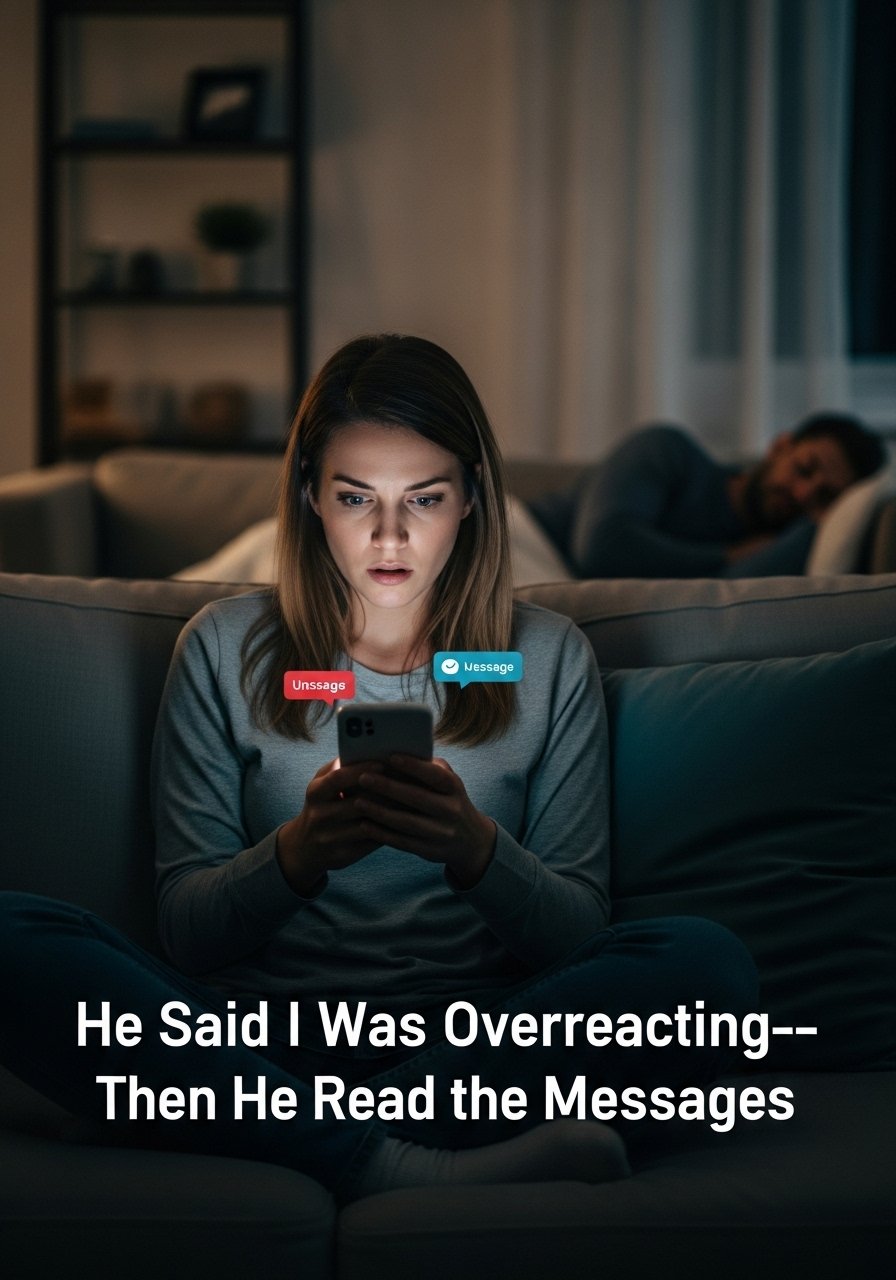
He fell asleep on the couch. His phone buzzed.
I didn’t plan to look. I swear I didn’t. But the screen lit up with a preview:
Emma: “I miss you tonight.”
That was it.
No emojis. No ambiguity. Just four words that landed like a punch.
My hands were shaking as I picked up the phone. I told myself I’d just confirm what I already knew. One glance. One message.
I unlocked it.
What I saw wasn’t a single inappropriate text.
It was months of them.
Inside jokes. Complaints about work. Complaints about me—how I was “always stressed,” how I “didn’t get him anymore.”
Then it escalated.
Late-night messages. Heart emojis. “Wish you were here.”
Photos—not explicit, but intimate enough that my stomach turned.
I felt stupid for ever questioning myself.
The next morning, I confronted him.
I didn’t yell. I didn’t cry. I just said, “I read the messages.”
He went silent.
Then defensive.
“You invaded my privacy.”
“I read them because you lied.”
“They didn’t mean anything.”
“They say you miss her.”
“You’re overreacting.”
There it was again.
He insisted nothing physical had happened. That it was just emotional. That everyone flirts. That I was blowing it out of proportion.
“You’re acting like I cheated,” he said.
“Did you hide it from me?” I asked.
“Yes.”
“Did you talk about me behind my back?”
“Yes.”
“Did you tell another woman you missed her?”
“Yes.”
He shrugged. “That doesn’t mean what you think it means.”
I realized then that he wasn’t sorry.
He was annoyed.
For weeks after that, we lived in this strange limbo. He promised to “pull back.” He said he’d set boundaries. He said he’d stop texting her outside of work hours.
But every time I brought it up, he reminded me how “obsessed” I was becoming.
One night, after another argument, he said something that changed everything.
“I think you just want to be hurt,” he said. “You’re choosing to see this as a betrayal.”
That’s when I stopped arguing.
Instead, I made a decision.
If he truly believed I was overreacting, then maybe he needed to see exactly what I was reacting to.
A week later, I asked him to sit down with me.
“I want you to read the messages,” I said. “All of them. Out loud.”
He laughed. “Why would I do that?”
“Because if it’s nothing, it shouldn’t be a problem.”
He hesitated. Then, smugly, he agreed.
At first, he read quickly. Casually. Like it was no big deal.
Then his tone changed.
He slowed down.
He skipped lines.
I stopped him. “No. Read all of it.”
Halfway through, he went quiet.
By the time he reached the messages where Emma said, ‘If she wasn’t in the picture…’ his voice cracked.
When he finished, he didn’t look at me.
“I didn’t realize how bad it sounded,” he said.
I didn’t feel vindicated.
I felt tired.
Because it shouldn’t take him hearing his own words to believe my pain was real.
I asked him one last question.
“If I had written these messages to another man, would you still think I was overreacting?”
He didn’t answer.
We’re separated now.
Some days he says he’s sorry. Other days he says I “gave up too fast.”
But I don’t wonder anymore if I imagined it.
Letting him read those messages didn’t save our marriage.
It saved my sanity.