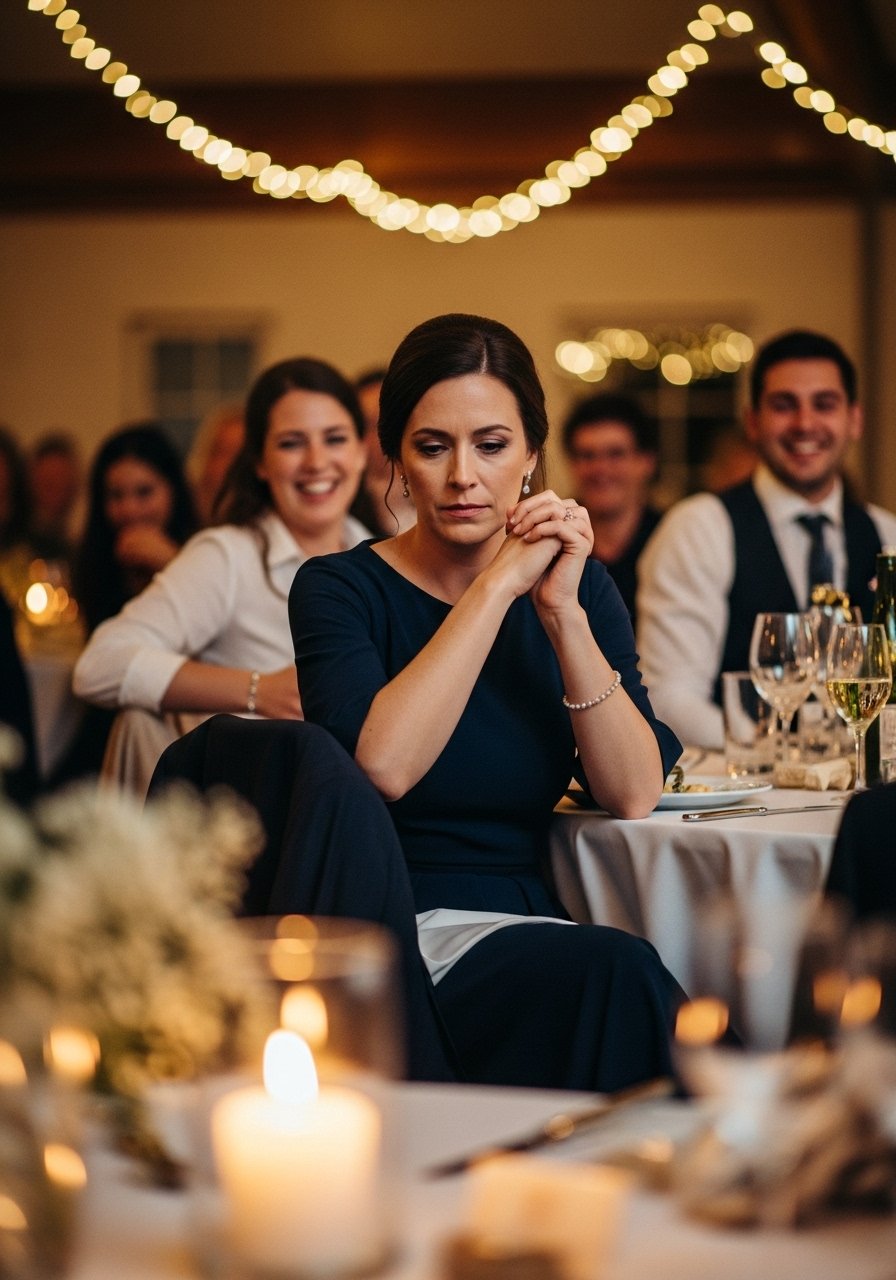
I never imagined I’d be the kind of person who quietly keeps receipts—emotionally or financially—about family. But here I am, still replaying a single sentence in my head months later, wondering when support turned into invisibility.
My sister and I have always had a complicated relationship. She’s younger, louder, more openly emotional. I was the “reliable” one—the one who showed up, smoothed things over, and filled gaps without being asked. Growing up, that dynamic felt normal. As adults, I didn’t question it. I thought that’s just what older siblings do.
So when she got engaged and started panicking about money, I stepped in.
At first, it was small things. I covered the venue deposit when it was due sooner than expected. Then the florist needed a partial payment to hold the date. Then the dress she fell in love with was “just a little over budget.” Every time, she promised she’d pay me back once things settled.
They never did.
By the time the wedding arrived, I had paid for most of the major expenses. Not because I was pressured outright—but because every conversation ended in tears, stress, and “I don’t know what I’d do without you.”
I told myself I was helping. I told myself it was temporary. I told myself it would be appreciated.
The wedding day itself was beautiful. I arrived early, helped the coordinator, fixed place cards, and made sure my sister had water when she forgot to eat. Guests complimented the décor, the flowers, the atmosphere. I smiled and said thank you, even when no one realized how literal that gratitude should’ve been.
Then came the speeches.
The maid of honor went first. She thanked our parents for their support. She thanked the in-laws for their generosity. She thanked friends who “helped make this day possible.”
My name wasn’t mentioned.
I brushed it off. I told myself maybe my sister would say something.
She took the microphone next.
She thanked our parents.
She thanked her husband’s family.
She thanked coworkers, friends, and even the wedding planner.
Then she looked directly at me and said, smiling,
“And thank you to my sister for being here today, just like any other guest.”
People clapped.
I felt like the air left my lungs.
I sat there frozen, trying to convince myself I misheard her. But afterward, relatives came up to me saying things like, “That was sweet how she included you,” or “You must be so proud to support her emotionally.”
Emotionally.
I locked myself in the bathroom and cried quietly so I wouldn’t cause a scene. I didn’t want to ruin her day. I didn’t want to be dramatic. I didn’t want to make it about me.
The next morning, while everyone was packing up and reliving highlights, she pulled me aside.
She asked if I could help cover the final balance because weddings are expensive and she was already stressed.
That’s when it hit me.
This wasn’t an oversight.
This wasn’t forgetfulness.
This was a pattern.
I wasn’t a sister—I was a resource.
And the moment I finally questioned it… everything changed.