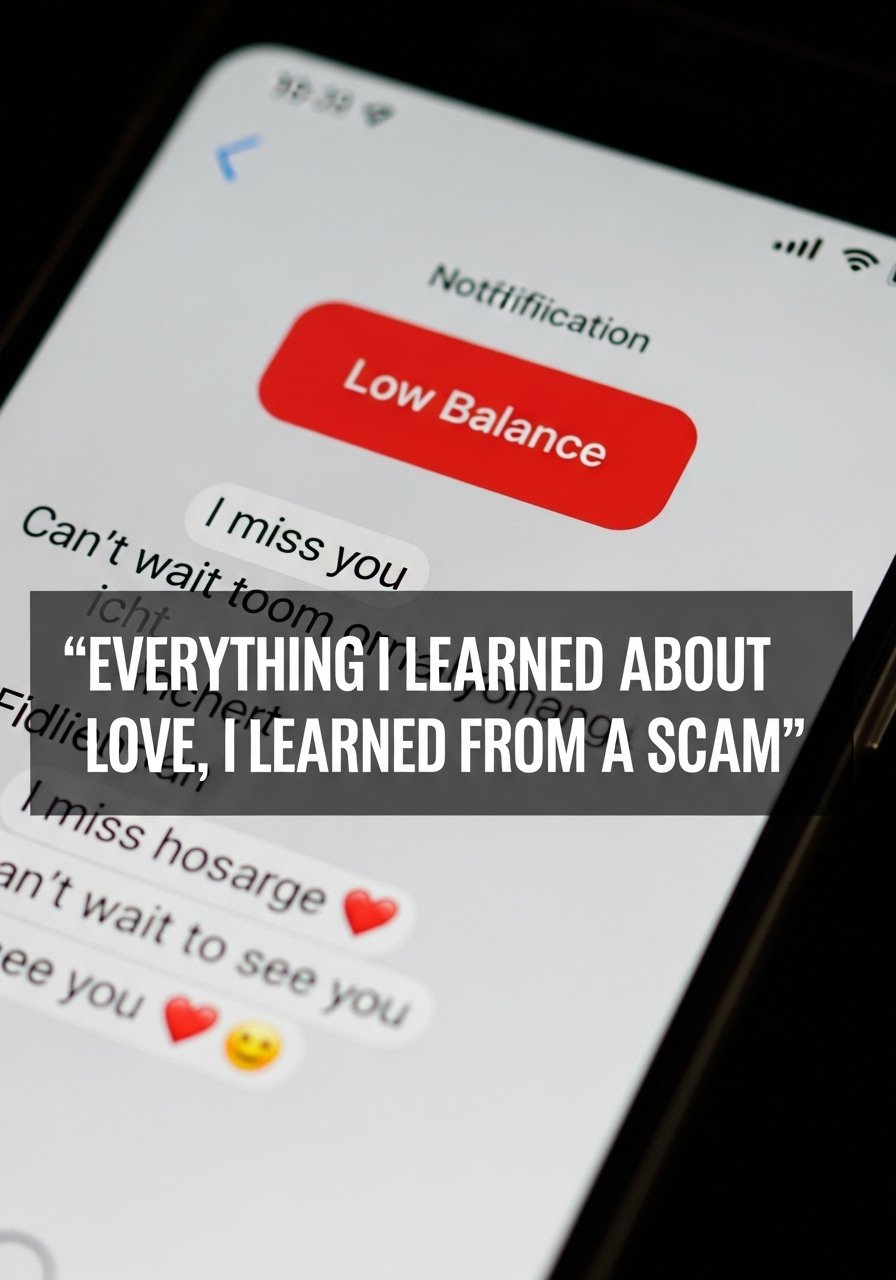
His name was “Mark.” Or at least, the stolen photos of a rugged, salt-and-pepper architect from Seattle belonged to someone who might have been named Mark.
I consider myself a cynical person. I’m the one who warns my parents about phishing emails. Yet, three months ago, I found myself staring at my bank account, realizing I had sent $4,500 to a man who didn’t exist. But as the police report was filed and the shame settled in, I realized something even more uncomfortable: The scammer had provided a better “relationship” than any of my actual exes.
In the wreckage of that fraud, I learned three brutal truths about love that I’d been ignoring for years.
1. We don’t fall for people; we fall for the attention they give us. Mark didn’t win me over with his looks. He won me over with his consistency. Every morning at 7:00 AM: “Good morning, beautiful. Hope your presentation goes well.” Every evening at 9:00 PM: “Tell me about the best part of your day.” It was the “Love Bombing” phase of the scam. In our busy, modern lives, we are so starved for focused, consistent attention that when someone finally provides it, we don’t see red flags—we see a soulmate. I realized that my past relationships failed not because of a lack of “spark,” but because we stopped being curious about each other. The scammer’s greatest weapon was simply listening.
2. Vulnerability is a currency—and we spend it too fast. To get me to trust him, Mark shared “secrets.” He told me about his wife’s passing (fabricated) and his strained relationship with his daughter (pure fiction). In response, I opened up. I shared my fears of inadequacy and my financial anxieties.
I learned that we often mistake “trauma dumping” for intimacy. By sharing my wounds so early, I wasn’t building a foundation; I was giving a stranger a roadmap to my buttons. Real love requires a slow burn, but we’ve been conditioned by fast-paced digital culture to believe that “instant connection” is the only kind that matters.
3. Hope is the ultimate blindfold. When the first “emergency” happened—a frozen business account in Dubai—my gut screamed. But my heart whispered, “But if you don’t help him, the dream ends.” I wasn’t protecting him; I was protecting the version of myself I was when I was with him. I was happy for the first time in years, and I was willing to pay a “happiness tax” to keep the illusion alive. We do this in real relationships, too. We ignore the drinking, the lying, or the incompatibility because we are more in love with the potential of the person than the reality.
The Aftermath The money is gone. Mark is a ghost. But the clarity I have now is worth more than the $4,500. I realized that I had been looking for a “Mark” my whole life—someone to fill the silence and validate my existence.
The scam didn’t just take my money; it exposed the holes in my self-esteem. Now, when I date, I don’t look for the “bomb.” I look for the slow, boring, verifiable truth. I learned that if love feels like a high-speed chase, you’re probably the one being hunted.