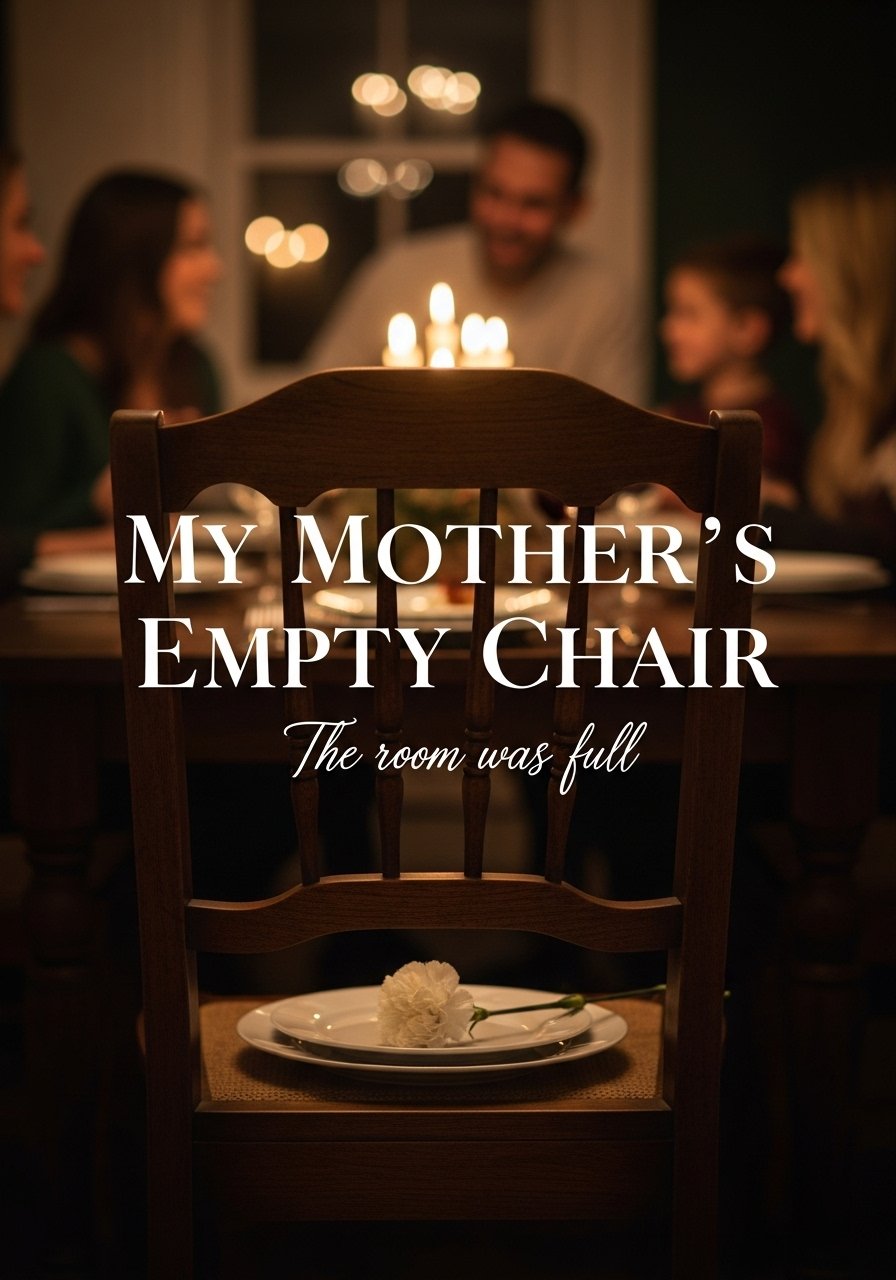
The table was set for twelve, just like it always was. The heirloom lace tablecloth—the one she only brought out for December—was crisp and smelled faintly of lavender and cedar. The silver was polished until it gleamed like moonlight. But at the far end of the table, between my brother and my aunt, there was a gap that felt like a physical weight. It was the space where she used to sit, the space that now held nothing but an empty chair.
This was the first Christmas without my mother. For thirty years, she had been the sun that our family orbited. She was the one who knew exactly how much cinnamon belonged in the yams, the one who orchestrated the “surprise” ornaments, and the one whose laugh could be heard over the chaotic roar of three generations of relatives. Without her, the house felt like a stage set where the lead actor had suddenly walked off, leaving the rest of us to fumble through lines we hadn’t bothered to memorize.
The grief of the holidays isn’t usually a loud, crashing wave. It’s a series of small, sharp stabs. It’s reaching for the phone to ask her where the gravy boat is kept, only to remember midway through the gesture. It’s seeing her handwriting on a recipe card and feeling the air leave your lungs.
My father was the hardest to watch. He moved through the kitchen like a ghost, his hands hovering over the counters as if searching for hers. He had insisted we keep every tradition exactly the same. We wore the matching pajamas. We played the Bing Crosby record. We lit the bayberry candle. But as the afternoon wore on, the “sameness” started to feel like a lie. We weren’t the same. We were fractured.
When it finally came time for dinner, the room went silent as we all took our seats. We stared at that empty chair. It felt disrespectful to sit there, but unbearable to look at. My aunt reached out to pull the chair away, thinking perhaps it would be easier if it wasn’t there—a “sight out of mind” approach to mourning.
“No,” my father said, his voice surprisingly steady. “Leave it.”
He walked to the sideboard and picked up a single, white carnation—her favorite. He placed it on the empty plate in front of her chair. Then, he did something unexpected. He didn’t give a somber eulogy. He told a story about the year she accidentally set the napkins on fire while trying to be “elegant.”
Suddenly, the dam broke. My brother remembered the year she hid the “Pickle Ornament” so well that we didn’t find it until July. My cousin joked about her legendary “secret” ingredient in the punch (which turned out to be just a lot of extra sugar).
We realized that the empty chair didn’t have to be a vacuum that sucked the joy out of the room. It was a monument. By acknowledging the space she left behind, we were acknowledging the massive impact she had on our lives. We weren’t ignoring the grief; we were inviting it to dinner, along with all the love that came with it.
That night, as I washed the dishes—using the soap she liked, the one that smells like lemon—I realized that she wasn’t actually gone. She was in the way I folded the napkins. She was in the way my father laughed for the first time in months. She was in the very traditions she had spent decades building.
The chair was empty, yes. But the room was full.