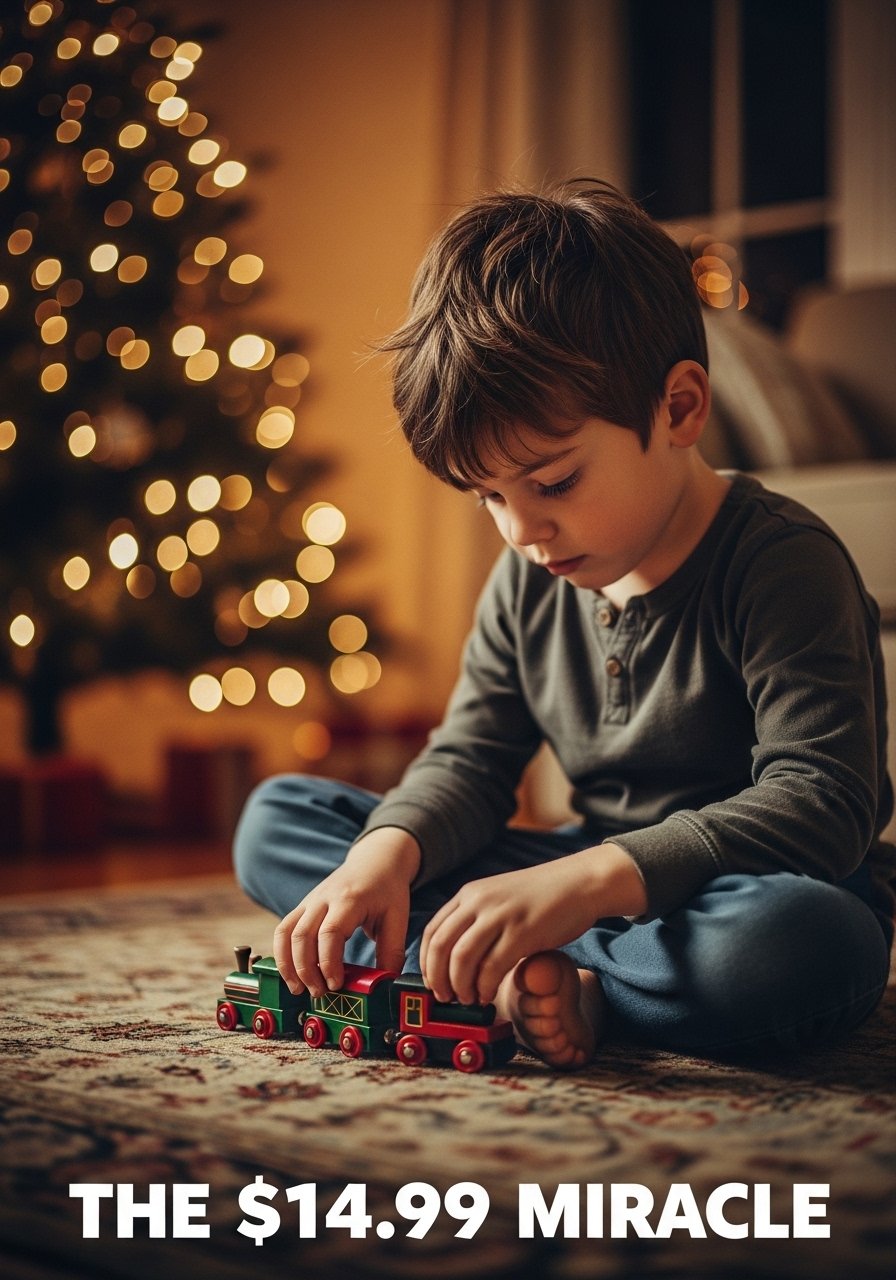
The tree was shedding more needles than usual, a tired sentinel in our living room. It was Christmas Eve, and a deep, cold dread had settled in my stomach, far heavier than the half-eaten gingerbread man beside me. Across the room, my son, Leo, was meticulously arranging his small collection of superhero action figures. He was five, and his belief in magic, in Santa, in the sheer wonder of Christmas, was absolute. And I, his father, felt like I was about to shatter it.
It was 2018, and things were… thin. Thinner than they’d ever been. A series of unexpected medical bills, a car repair that ate our emergency fund whole, and a dip in my freelance work had left us scrambling. We’d managed to keep the lights on and food on the table, but the idea of “gifts” felt like a cruel joke the universe was playing on us. My wife, Sarah, and I had a silent, worried language we spoke with our eyes. We’d already explained to Leo that Santa might be bringing “fewer, very special gifts” this year. He’d nodded, wide-eyed, absorbing it with the innocence only a child possesses, but I knew it was just a gentle softening of the inevitable disappointment.
We’d tried. We really had. We’d scoured thrift stores, looking for something, anything, that might spark joy. But everything felt… wrong. Used. Like someone else’s discarded joy. Leo deserved more than discarded joy. He deserved something new, something that felt chosen just for him.
That afternoon, in a desperate, last-ditch effort, I found myself in the dollar store. The fluorescent lights hummed, casting a garish glow on plastic toys and cheap holiday trinkets. My shoulders slumped. This was it. This was the best I could do. I drifted aimlessly, picking up a brightly colored slinky, a pack of crayons, then putting them back down. They felt like pity gifts. My eyes scanned the shelves, my heart aching with every cheap, disposable item I saw.
Then I saw it. Tucked away on a dusty bottom shelf, almost hidden behind a stack of novelty socks: a small, intricately detailed wooden train set. Not a fancy, electric one, just a simple, old-fashioned track and a few wooden cars with magnetic connectors. The box was slightly dented, the cellophane around it a little loose. It wasn’t perfect. But it was wood. It felt solid. Real. And the price tag, faded and barely legible, read: “$14.99.”
A wave of something akin to hope, fragile but real, washed over me. It wasn’t the giant robot Leo had been dreaming of, or the elaborate LEGO set his friends had. But it was something he could build. Something he could create stories with. Something that felt like it belonged in a classic Christmas movie, not a desperate dollar store run. I bought it, along with a roll of cheap wrapping paper, my hands shaking slightly.
That night, after Leo was asleep, Sarah and I sat on the floor, whispering as we wrapped the train. We added a few books from a consignment store and a handmade coupon for “one extra bedtime story.” It wasn’t much, by any conventional standard. We braced ourselves for the morning.
Christmas morning arrived with the usual chaotic energy of a child who believes. Leo tore through the paper, eyes wide. He loved the books. He shrieked with delight at the “extra story” coupon. Then he got to the train.
He pulled it out of the box, slowly, his little brow furrowed in concentration. He traced the wooden tracks with his finger, then connected the magnetic cars. There was no instant, explosive joy, no shouts of “This is the best ever!” Instead, there was a quiet, profound focus. He spent the next three hours on the living room rug, building elaborate tracks, making train noises, creating entire worlds for his wooden engine. He didn’t ask for anything else. He didn’t mention the robot. He didn’t look for more presents under the tree. He was utterly, completely, absorbed.
Sarah caught my eye over Leo’s head. There were tears in her eyes, and a soft, relieved smile. In that moment, the $14.99 train wasn’t just a toy. It was everything. It was hope. It was peace. It was the knowledge that sometimes, the most profound joy isn’t bought, it’s simply found. It’s the quiet understanding that love, not expense, is the true currency of Christmas.