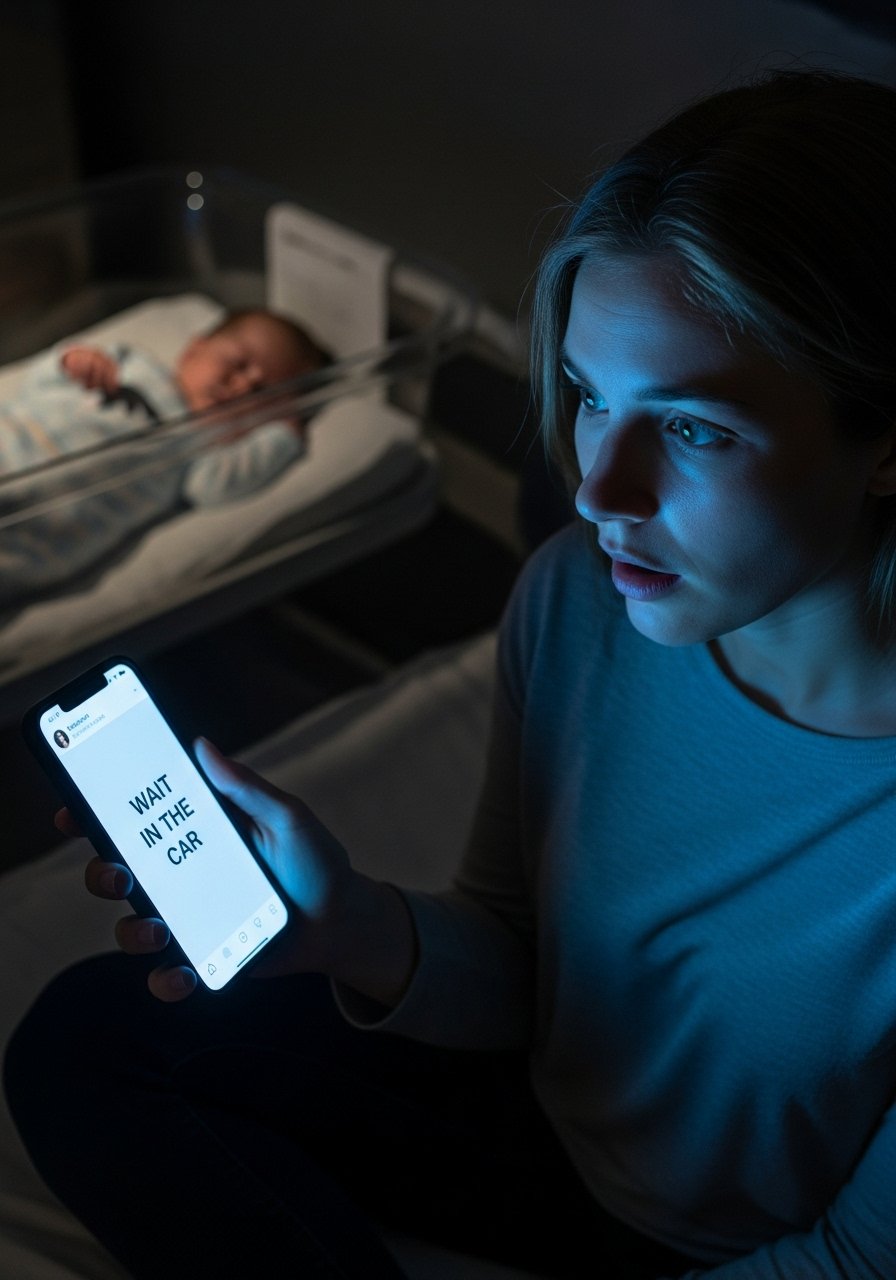
It starts with a visceral image: a woman, exhausted and vulnerable, still wearing her plastic hospital ID bracelet. She has just given birth. She is holding a newborn. And then comes the “kick”—her own parents tell her to sit in the car because her sister wants to reclaim the spotlight for a ten-year-old’s birthday.
If your heart rate just went up, the author has already won.
This specific story, which recently tore through social media feeds, is a masterclass in a burgeoning literary genre known as Relationship Drama Fiction or “Ragebait.” It isn’t just a post; it is a meticulously engineered piece of psychological machinery designed to trigger a “justice reflex” in the human brain.
But how do these stories work? And why are we—the most technologically advanced generation in history—falling for them?
1. The “Rage-Hook” Methodology
Every viral drama follows a “Power-to-Powerless” ratio. In the “Hospital Bracelet” story, the narrator is at her most powerless: physically drained from childbirth and recovering from preeclampsia. Conversely, the villains (the parents and the sister) are at their most powerful: they are in their own home, controlling the narrative, and—crucially—holding the narrator’s money.
The mention of the $3,000 is the secret sauce. In the world of internet drama, a “social slight” is annoying, but “theft” is an objective crime. By adding a specific dollar amount that the narrator “funded,” the writer ensures the reader feels a sense of righteous indignation. It’s no longer just a family argument; it’s a financial scam.
2. The Archetypes of the Digital Soap Opera
These stories don’t use real people; they use “skins” or archetypes that we recognize from our own lives or movies:
- The Golden Child: Usually a sister who is “divorced,” “lazy,” or “favored.” She represents everyone’s worst sibling experiences.
- The Enabler Parents: They represent the frustration of a generation that feels unheard by their elders.
- The “Vindication” Ending: These stories almost always begin with a “fast-forward” to the future, where the narrator is successful and the family is in shambles. This is “Justice Porn.” It promises the reader that being the “good guy” pays off in the end.
3. Why Our Brains Crave the Deception
Psychologically, humans are “prosocial” animals. We evolved to survive by identifying who in our tribe is a “cheater.” When we read a story about a sister stealing a newborn’s party, our ancient brain signals a “Red Alert.”
We aren’t just reading for fun; we are mentally practicing how we would handle a “cheater” in our own tribe. We comment, we share, and we argue because it makes us feel morally superior. In a world where real-life justice is slow and complicated, these stories offer a 5-minute cycle of Crime, Outrage, and Punishment.
4. The “AI-Driven” Evolution
While these stories used to be written by bored teenagers or creative writers looking for practice, they have evolved. Modern “Ragebait” is often polished by AI or written by “content farms” specifically to be read by text-to-speech bots on TikTok.
They use “Purple Prose”—exaggerated descriptions like “her smile was bright and sharp as broken glass”—to make the story feel more cinematic. These aren’t personal diaries; they are scripts.
5. The Cost of the Click
The danger of “The $3,000 Party” isn’t that it’s fake; it’s that it desensitizes us to real stories of family struggle. When we consume drama as a product, we begin to view our own relationships through the lens of “heroes” and “villains.” We start looking for “Red Flags” in every interaction, fueled by the extreme scenarios we read online.
Conclusion: The New Urban Legend
The “Hospital Bracelet” story is the 21st-century version of the “hook on the car door” campfire tale. It’s an urban legend designed to reflect our modern anxieties: fear of being used, fear of being replaced, and the desire for financial and emotional independence.
The next time you see a story that makes you want to scream at your phone, take a breath. Look for the “Anatomy of the Lie.” Is there a specific dollar amount? Is there a cartoonishly evil villain? Is the narrator a perfect martyr?
You aren’t reading a confession. You’re watching a machine work. And it just tried to steal your attention.