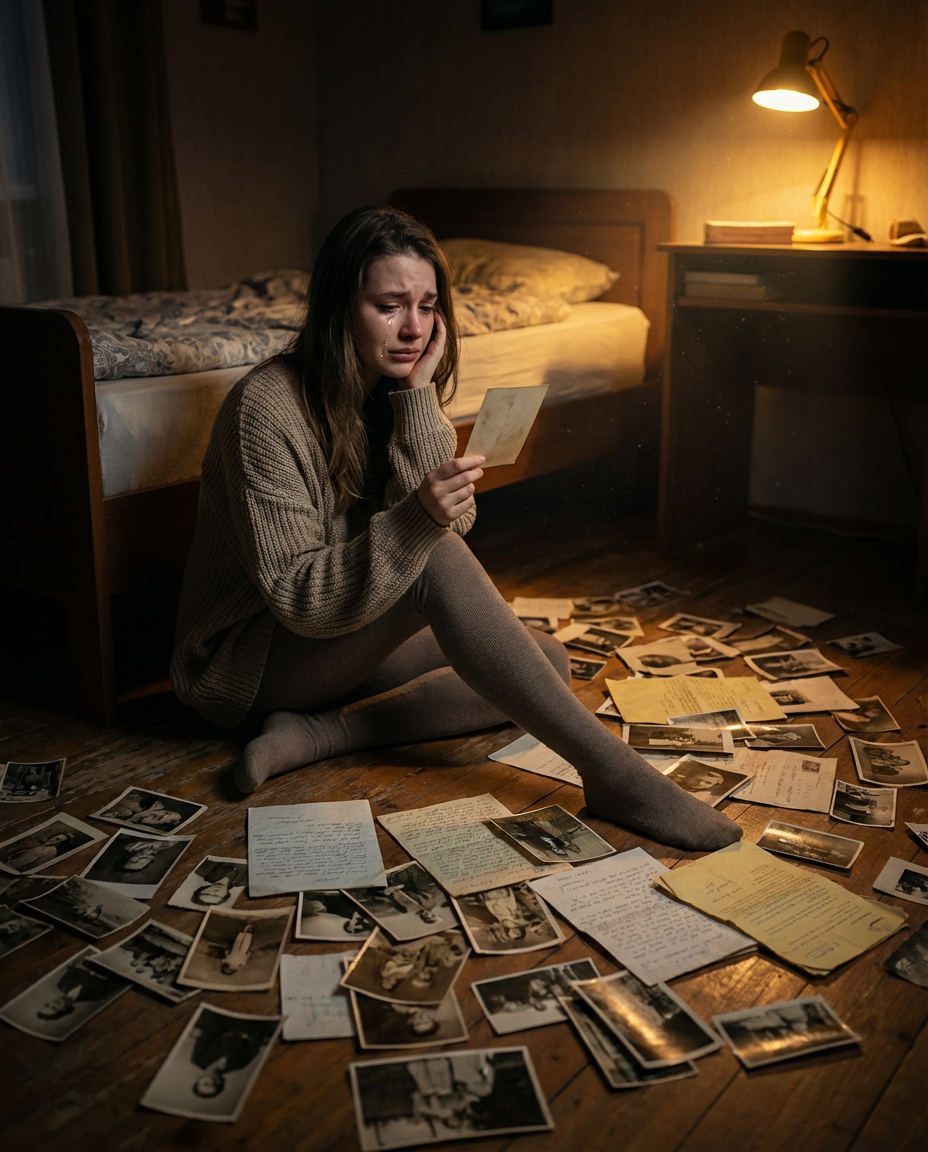
The email was supposed to be about my student loan refinancing.
My mom had been helping me with the paperwork, and I’d asked her to forward me the confirmation from the bank. When I opened her laptop that morning while she was in the shower, I saw her Gmail was already logged in. I clicked on her inbox to find the email.
The subject line at the top said: “Ella’s 27th Birthday – Should We Tell Her?”
My name is Ella. I turned 27 three weeks ago.
I clicked it without thinking. The email was from someone named Patricia Chen to my mother. It was dated two days before my birthday.
“Linda, I know we agreed to wait until they were 30, but Ella keeps asking questions about her birth. Maya hasn’t asked yet, but I think she senses something. Maybe it’s time. They deserve to know about each other.”
I read it three times before my brain could process what it meant.
Maya. They. Each other.
I scrolled through my mom’s sent folder with hands that wouldn’t stop shaking. I found the reply she’d sent back.
“Patricia, I understand your concerns, but we made a promise. The adoption was closed for a reason. Ella doesn’t need this disruption in her life right now. Neither does Maya. Let’s stick to the original plan.”
Adoption. I knew I was adopted. My parents told me when I was eight. But they never mentioned a twin.
I kept scrolling. Further back. Years back. The emails went back 27 years. Hundreds of them. All between my mother and Patricia Chen. All about two girls named Ella and Maya.
My mom came out of the bathroom and found me sitting there with her laptop.
“What are you doing?” she asked.
I turned the screen toward her. “Who’s Maya?”
Her face went white. She sat down on the bed. “You weren’t supposed to see that.”
“Who is she?”
My mom closed her eyes. “She’s your sister.”
“I don’t have a sister.”
“You do. You have a twin sister.”
The room tilted. “That’s not possible. You would have told me.”
“We were going to. When you turned 30. We had an agreement with her parents.”
“Why 30?”
“Because that’s what the adoption agency recommended. They said twins separated at birth should be told when they’re mature enough to handle it.”
“I’m 27. I’m mature enough.”
“Ella, please understand. This was an impossible situation. When you and Maya were born, your birth mother couldn’t keep both of you. The agency placed you with us and Maya with another family. It was a closed adoption. We weren’t supposed to have contact.”
“But you did. You’ve been emailing her mother for 27 years.”
She nodded slowly. “Patricia and I met at the adoption agency. We realized our daughters were twins. We decided to stay in touch. To share updates. To make sure you were both okay.”
“Does she know about me?”
“Not yet. Patricia and I agreed to tell you both at the same time.”
I stood up. My legs felt weak. “I have a twin sister and you never told me.”
“We were protecting you both.”
“From what?”
“From the pain of knowing you were separated. From the questions we couldn’t answer. From the grief of losing each other before you even knew each other existed.”
“That wasn’t your choice to make.”
I left her apartment and drove home. I lived forty minutes away in a studio I could barely afford. The whole drive, I kept thinking: Maya. I have a sister named Maya.
When I got home, I opened my laptop and searched for Patricia Chen. It took me two hours to find the right one. She lived in Sacramento. Three hours away from me.
I searched for Maya Chen next. Found her on Instagram immediately. Private account. But her profile picture was public.
I stared at it for a long time.
She looked exactly like me. Same dark hair. Same round face. Same eyebrows. We even had the same mole above our left eyebrow.
I sent her a follow request and then closed my laptop because I couldn’t breathe.
My mom called me six times that day. I didn’t answer. She texted: “Please call me back. We need to talk about this.”
I texted back: “There’s nothing to talk about. You lied to me for 27 years.”
“We didn’t lie. We just waited.”
“That’s the same thing.”
Three days later, Maya accepted my follow request. Then she sent me a DM.
“Do I know you? You look really familiar.”
My hands shook as I typed back: “Can we talk on the phone?”
She sent me her number. I called immediately.
“Hello?” Her voice sounded like mine. Exactly like mine.
“Hi. This is going to sound crazy.”
“Okay.” She laughed nervously. “I’m listening.”
“I think we’re twins. I think we were separated at birth and our parents never told us.”
Silence. Long silence.
“What?” she finally said.
“I found emails between my mom and someone named Patricia Chen. Your mom. They’ve been in contact for 27 years. They were planning to tell us when we turned 30.”
“My mom’s name is Patricia.”
“I know.”
“This doesn’t make sense. I would know if I had a twin.”
“I thought the same thing. But look at my Instagram. Look at my photos.”
She was quiet. I could hear her breathing change.
“Oh my god,” she whispered. “You look exactly like me.”
“I know.”
“Why wouldn’t they tell us?”
“I don’t know. They said they were protecting us.”
“From what?”
“That’s what I asked.”
We talked for three hours. She told me about her life. Grew up in Sacramento. Worked as a graphic designer. Had a cat named Miso. Hated cilantro. Loved horror movies. Had the same recurring dream about drowning.
I had the same dream. The same fear of cilantro. I’d wanted a cat my whole life but my mom was allergic.
“When can I meet you?” she asked.
“Whenever you want.”
“This weekend? Can you come to Sacramento?”
“Yes.”
I drove up that Saturday. She’d sent me her address. When I pulled up to her apartment building, she was already outside waiting.
We stood there staring at each other for a full minute. It was like looking in a mirror.
“This is so weird,” she said.
“I know.”
She hugged me. I’d never hugged someone who felt so familiar and so strange at the same time.
We went to a coffee shop and talked for six hours straight. About everything. Our childhoods. Our parents. Our lives. The things we had in common were impossible. We both bit our nails when we were nervous. We both organized our bookshelves by color. We both had the same laugh. The same hand gestures. The same way of tilting our heads when we were thinking.
“Did your parents tell you anything about our birth mother?” I asked.
“Just that she was young. Couldn’t take care of us. That’s all they said.”
“Same here.”
“Do you want to find her?”
I’d been thinking about that for days. “I don’t know. Do you?”
“Maybe. I mean, she gave us up. But she’s still our mother. Biologically at least.”
“My mom would lose it if I tried to find her.”
“Mine too. But they already lied to us about this. Maybe they lied about other things too.”
That thought had been growing in my mind since I first saw those emails. What else didn’t I know?
Maya pulled out her phone. “I have an ancestry DNA kit at home. Never used it. What if we both take one?”
“That could tell us about our birth mother?”
“It could tell us if we have other relatives. Siblings. Cousins. Anything.”
We ordered the kits that night. Sent them in the next week. Results took six weeks.
During those six weeks, Maya and I talked every single day. Sometimes for hours. She drove down to visit me twice. I went back to Sacramento three times. We were making up for 27 years of lost time.
My mom kept trying to reach out. So did Patricia. They wanted to meet with both of us. To explain. Maya and I kept putting them off.
“I’m not ready,” Maya said. “I’m too angry.”
“Me too.”
But I wasn’t sure if I was angry or just hurt. Or both.
The DNA results came back on a Tuesday.
Maya called me immediately. “Did you get your results?”
“Just logged in. You?”
“Same. Let’s look together.”
We both opened our results on video call. The ethnicity breakdown was identical. Korean, Chinese, Japanese. No surprises there.
Then I clicked on DNA relatives.
My screen showed 847 matches. Close relatives. Distant cousins. Second cousins twice removed.
At the top of the list was Maya. Shows as: Twin sister.
Under her name was another name. Shows as: Half sister.
“Do you see that?” Maya’s voice was tight.
“Yeah. Grace Kim. Half sister.”
“I have her too. Same name.”
We both sat there staring at our screens.
“We have another sister,” I said.
“How is that possible? Our birth mother had another child?”
I clicked on Grace Kim’s profile. It was public. Her profile picture showed a woman who looked about 30. She had our eyes. Our nose. But her face was thinner. Her hair lighter.
“She looks like us,” Maya whispered.
I sent Grace a message through the DNA site: “Hi. I think we might be related. Can we talk?”
She responded six hours later: “I’ve been waiting for one of you to reach out. Yes. We need to talk.”
We set up a call for the next day. Grace lived in Portland. She was 31. Four years older than us.
When we got on the video call with her, she was crying before anyone even said hello.
“I’ve known about you both since I was 18,” she said. “Our mother told me. She said she had to give you up. That she couldn’t keep twins. But she kept me.”
“Why?” Maya asked.
“Because by the time she had me, she was older. More stable. In a better place. She wanted to find you. To tell you. But the adoption was closed. She tried for years. Then she got sick.”
“Sick?” I asked.
Grace’s face crumpled. “She died two years ago. Ovarian cancer. She made me promise to find you both. To tell you she never wanted to give you up. That she thought about you every single day.”
The room went blurry. I realized I was crying.
“What was her name?” Maya asked.
“Sarah. Sarah Kim.”
We talked for two hours. Grace told us about our mother. How she got pregnant with us when she was 19. How the father disappeared. How her family disowned her. How she tried to keep us but couldn’t afford two babies. How she chose to give us up because she wanted us to have better lives.
“She kept photos,” Grace said. “From the hospital. When you were born. She never forgot you.”
“Can we see them?” I asked.
“I’ll send them.”
The photos came through that night. Our mother holding two tiny babies in a hospital bed. Her face young and scared and full of love.
I stared at that photo for hours.
The next day, I finally called my mom back.
“I know about Grace,” I said.
She was quiet. “Who’s Grace?”
“Our half sister. The one our birth mother kept.”
“Ella, I didn’t know—”
“She died. Two years ago. Our birth mother. And you never told me she existed. You never gave me the chance to meet her.”
“The adoption was closed. We couldn’t—”
“You’ve been emailing Patricia for 27 years. You could have tried.”
“I’m sorry.”
“I don’t know if sorry is enough.”
I hung up.
Maya and I decided to meet Grace in person. We drove to Portland together the following weekend. When we all stood together for the first time, Grace started crying again.
“You look just like her,” she said. “Both of you.”
We spent the weekend going through our mother’s belongings. Grace had kept everything. Photo albums. Letters. Journals.
In one of the journals, we found an entry from right after we were born:
“I held them today. Ella and Maya. Tomorrow they go to their new families. I’m giving them up because I love them. Because they deserve more than I can give them right now. But I will never stop being their mother. I will think about them every birthday. Every Christmas. Every moment of every day. And someday, if they want to find me, I’ll be here waiting.”
But she wasn’t waiting anymore. Because we’d waited too long to look.
That’s the part I can’t forgive. Not my adoptive parents. Not myself.
We were three hours away from each other our whole lives. Maya in Sacramento. Me in San Francisco. Grace in Portland. We could have known each other. We could have had a relationship with our birth mother.
But everyone decided for us that we couldn’t handle the truth.
And now our mother is gone, and all we have left are photos and letters and questions that will never be answered.