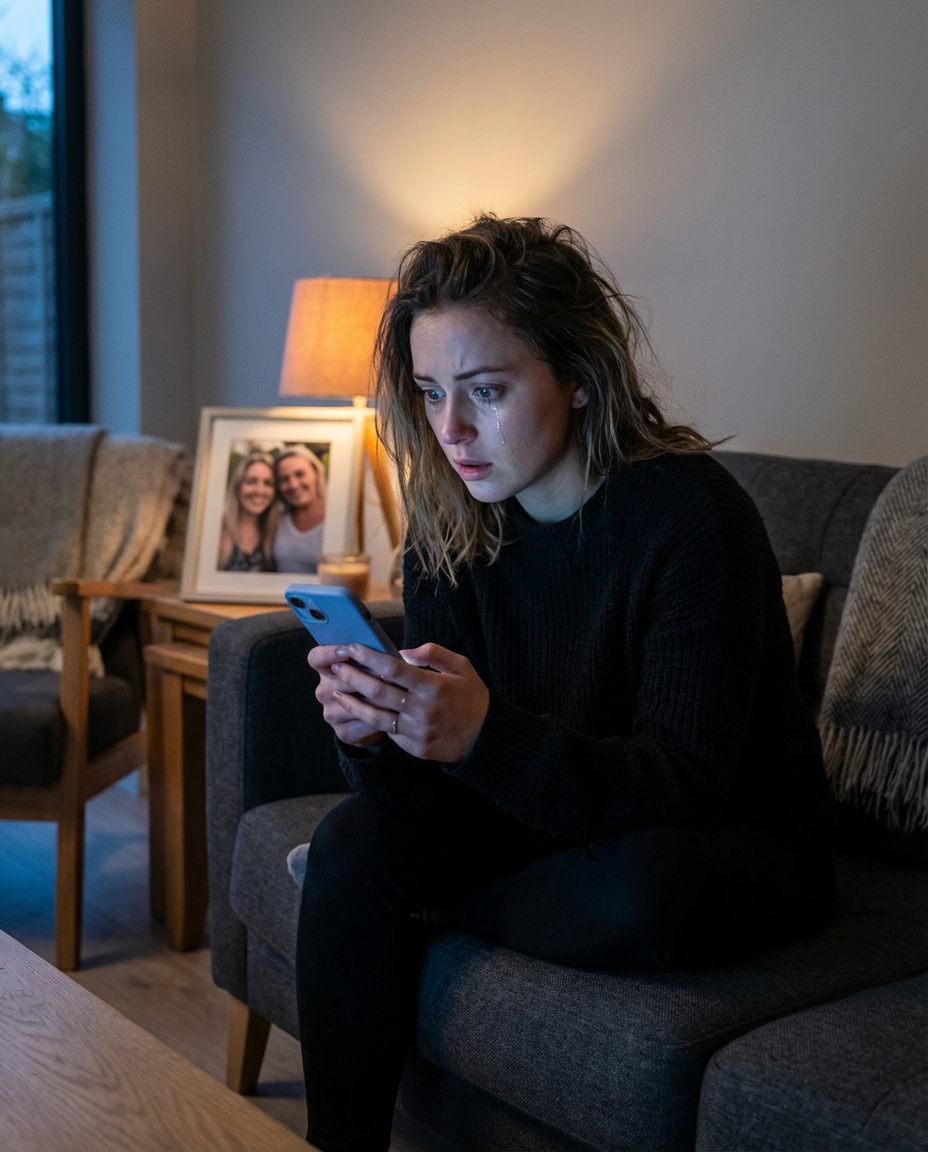
They say that friendship is a shelter, but they never tell you what happens when your friend decides to tear the roof off your house just so they can film the rain.
Sarah and I had been inseparable since sophomore year of college. We were the “ride or die” duo. She was the one who held my hair back when I was sick, the one who knew my coffee order by heart, and the one I called at 3:00 AM when my life fell apart. Or so I thought. I didn’t realize that while I was pouring my heart out, she was mentally drafting a script.
The Night Everything Changed
Six months ago, I was involved in a multi-car pileup. It wasn’t just a “fender bender.” I spent two weeks in the ICU and another month in a rehabilitation center learning how to walk without a limp. My car was a literal cube of crushed metal. More than the physical pain, the psychological toll was immense. I had night terrors. I couldn’t hear the sound of screeching tires without having a full-blown panic attack.
During those first few weeks, Sarah was there. She brought me magazines, she sat by my bed, and she even helped my mom coordinate my insurance paperwork. I felt so lucky. I remember telling her, “I don’t know how I’d get through this without you.”
She just squeezed my hand, her phone resting on the edge of the hospital bed, and whispered, “I’ll always be here to document your strength, Maya.” I thought it was a sweet, slightly odd thing to say. I didn’t realize she meant it literally.
The Discovery
I’m not a big social media person. I have a private Instagram with 200 followers, mostly family. Sarah, on the other hand, is an “aspiring lifestyle influencer.” She has about 50k followers and posts “Day in the Life” content. I never minded being in the background of her stories before—a shot of our brunch or a clip of us laughing.
Three weeks ago, I felt strong enough to finally log back into TikTok. I was scrolling through my “For You” page when a familiar face popped up. It was Sarah.
The video started with a black-and-white filter. Slow, melancholic piano music played in the background. The text overlay read: “Watching my best friend fight for her life was the hardest thing I’ve ever done. Part 1: The Accident.”
My heart dropped. The video featured a montage. There were photos of my mangled car—photos I hadn’t even seen yet because I wasn’t ready. There were “candid” clips of me in the hospital bed, looking pale and broken, hooked up to monitors. She had even recorded a voice memo of me crying during a particularly bad night in the ICU when I was drugged up on painkillers and terrified I’d never walk again.
The video had 1.2 million views.
The Content Machine
I spent the next three hours spiraling through her profile. It wasn’t just one video. It was a series.
- “How I maintain my mental health while being a caregiver for a trauma survivor.”
- “What to say to a friend who almost died (Use these prompts!).”
- “GRWM: Visiting my best friend in rehab + Outfit details.”
In the comments, thousands of strangers were praising her. “You are such an angel,” one wrote. “Maya is so lucky to have a friend like you,” said another.
But then I saw the “links in bio.” She was using my accident to transition into sponsorships for “stress-relief” gummies and “mental health” apps. She had turned the worst moment of my life into a content pillar for her personal brand. She had used my vulnerability as a backdrop for her aesthetic.
The Confrontation
I called her, my hands shaking. When she picked up, she sounded upbeat. “Hey babe! How’s the physical therapy going?”
“Why is there a video of me in the ICU on your TikTok, Sarah?” I asked. My voice was flat.
There was a long silence. Then, she sighed—the kind of sigh you give a difficult child. “Maya, I was wondering when you’d see that. I wanted to talk to you about it, but you’ve been so fragile. I did it for awareness. So many people are going through similar things, and they found so much comfort in your story.”
“It’s not your story to tell,” I snapped. “You recorded me while I was incoherent. You took pictures of my car before the police report was even finalized. You’re selling vitamins off the back of my trauma.”
“I think you’re being a little ungrateful,” she said, her voice turning cold. “Do you know how much work I put into those edits? I spent hours making sure you looked… well, as good as possible. And besides, I’ve been there for you every day. This is my journey, too. I’m the one who had to watch you almost die. I’m allowed to process that through my art.”
The Aftermath
That was the moment I realized the Sarah I knew was gone, or perhaps she never existed. To her, I wasn’t a person; I was “content.” My pain was just an engagement metric.
I told her never to contact me again. I blocked her on everything. But the damage was done. Because we have mutual friends, I started seeing the “response” videos. She posted a tearful 10-minute vlog titled, “Losing my best friend over a misunderstanding (Friendship Breakups are Trauma Too).”
Half of our friend group thinks I’m “overreacting” because she was there for me physically during the recovery. They say, “What’s the big deal? It’s just social media.” But they don’t understand the feeling of being watched when you thought you were being cared for. They don’t understand that every time she held my hand, she was probably checking the lighting.
I’m walking again now, without the limp. But the scars Sarah left are much harder to heal than the ones from the accident. I didn’t just lose my car that night; I eventually lost my best friend. And the worst part? She got 2 million views out of it.