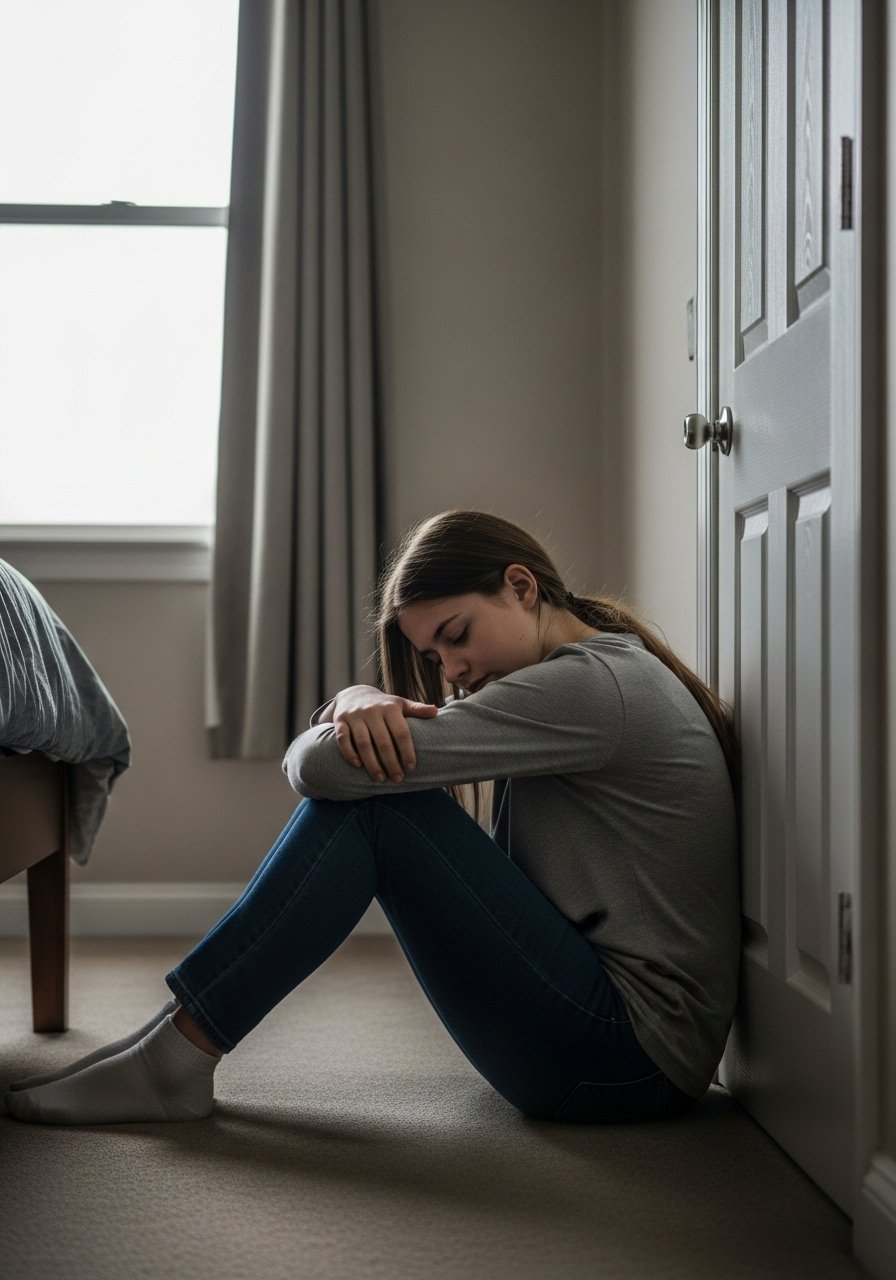
Family is supposed to mean safety. Comfort. A place where you don’t have to lock your door.
But sometimes, the very people who insist they’re “family” are the reason the door gets locked in the first place.
This is the story of why my teenage daughter locked her bedroom door against her own relatives—and why, despite the outrage from nearly everyone else in the family, I stood firmly on her side.
And I’d do it again.
The Setup: A House Full of People and No Space to Breathe
It started with what was supposed to be temporary.
My sister, her husband, and their two kids needed a place to stay “for a few weeks” while they dealt with some financial issues. I didn’t love the idea, but family emergencies are family emergencies, right? We had the space. Or so I thought.
I’m a single parent. My daughter, Lily (16), and I have lived in this house for years. It’s not huge, but it’s peaceful. Predictable. Calm.
Lily is quiet by nature. She’s not antisocial—she just values privacy. Her room is her sanctuary. She studies there. Draws there. Decompresses there. It’s the one place where the noise of the world doesn’t demand anything from her.
When my sister’s family moved in, that sanctuary vanished almost overnight.
The Early Red Flags Everyone Ignored
At first, it was small things.
My niece would wander into Lily’s room without knocking. My nephew would grab her things—headphones, sketchbooks, chargers—without asking. Lily complained to me quietly, apologetically, like she thought she was being dramatic.
“I know they’re younger,” she’d say. “I just wish they’d knock.”
I talked to my sister. She brushed it off.
“They’re kids,” she said. “They don’t mean anything by it.”
That sentence would become a recurring theme.
Then came the comments.
“Why do you need to lock yourself away all the time?”
“You’re too sensitive.”
“In this family, we don’t do ‘privacy.’”
Lily stopped leaving her room unless she absolutely had to.
When ‘Family’ Stops Feeling Safe
Things escalated.
My sister’s husband would walk into Lily’s room unannounced to “check something.” Sometimes it was the Wi-Fi. Sometimes it was the thermostat. Once, it was literally nothing—he just stood there, looking around, before asking why her door was closed.
That was the moment my stomach dropped.
Lily started sleeping with her headphones on, even when she wasn’t listening to anything. She told me it helped her feel like there was a barrier between her and the rest of the house.
One night, she came to me in tears.
“I don’t feel safe changing in my own room anymore,” she said.
That sentence will stay with me for the rest of my life.
The Lock
The next day, while Lily was at school, I installed a lock on her bedroom door. Not a fancy one. Just a simple interior lock with a key.
When I told her about it, she hugged me so tightly I almost cried.
That night was the first time she slept peacefully in weeks.
The following morning, all hell broke loose.
The Explosion
My sister noticed the lock immediately.
“Why does she get a lock?” she demanded. “What are you implying?”
I told her calmly that Lily needed privacy. That she had asked for it. That as her parent, it was my job to provide it.
My sister accused me of “raising a recluse.” Her husband said the lock made him feel “unwelcome.” My niece cried because she couldn’t “hang out” in Lily’s room anymore.
And then Lily locked the door.
In the middle of the day. While everyone was home.
She locked it, stayed inside, and didn’t come out for hours.
The Family Verdict: I’m the Villain
The group chat lit up.
Our parents called. My brother texted. Cousins weighed in.
Apparently, I was “destroying family unity.”
Apparently, Lily was being “disrespectful.”
Apparently, I was “encouraging antisocial behavior.”
Not one person asked how Lily felt.
Not one.
When I pointed that out, the response was always the same:
“She’s a kid. She’ll get over it.”
That’s when I realized something important.
This was never about the lock.
It was about control.
Why I Took My Daughter’s Side—No Hesitation
Here’s the thing people don’t want to admit:
Privacy is not a reward.
Safety is not something you earn by being agreeable.
And “family” is not a free pass to ignore boundaries.
Lily didn’t lock her door to be rude.
She locked it because she felt exposed.
She locked it because adults around her refused to listen.
And if the presence of a locked door makes someone feel threatened or offended, that says more about them than it does about the child behind it.
The Aftermath
Within a month, my sister’s family moved out.
They didn’t say goodbye.
The lock stayed.
So did Lily’s smile.
She started spending time in common areas again—because she chose to, not because she felt trapped. She started inviting friends over. She laughed more.
The house felt like home again.
What I Learned the Hard Way
If you’re a parent reading this, hear me clearly:
You are your child’s first line of defense—even against family.
Especially against family.
You don’t owe anyone access to your child’s body, space, or emotional world. You don’t owe explanations for boundaries that exist to protect them.
And you definitely don’t owe silence when something feels wrong.
My daughter locked her door against family.
And I unlocked something far more important: her trust.